Public Plan: The Progressive Caucus' Power In the Balance
The fight over including a public plan in this year's health care reform bill will be a critical test of the Progressive Caucus' power. While the Progressive Caucus, with its 78 members, is currently the largest caucus in the House, it has failed to exert leverage in proportion to its numbers. The need to get bipartisan support in the Senate limits the Progressive Caucus' ability to move legislation leftward.
The ability to use reconciliation to pass health care reform changes everything. The Democrats can pass a bill without any Republican support and afford to lose several moderate Democrats. If the Progressive Caucus manages to hold together, they can effectively dictate the terms of health care reform.
On April 2nd, the Progressive Caucus sent a letter Nancy Pelosi and Harry Reid claiming that the majority of the caucus would not support health care legislation which did not contain a public plan option. Now that the Democrats can pass health care reform with simple majority in the Senate, there is no excuse for compromising on the public plan.
Senator Max Baucus has made statements that he might abandon the public plan (which Obama campaigned on) in order to get Republicans to sign on to health care reform. If the Progressive Caucus wants to be taken seriously, they must vote against and kill any “bi-partisan” health care bill if it does not contain a public plan. By voting against an insufficiently progressive health care bill, they can force health care reform to be passed through reconciliation, where they would have more influence.
Wisely or not, the Progressive Caucus drew a line in the sand. Since health care reform can be passed without Republican support, there is no excuse for compromising on one of their (and Obama's) core principles. If a health care bill passes without a public plan option, it will prove that the Progressive Caucus is nothing more than a paper tiger. In politics, if you make a threat you must be prepared to carry it out or lose all credibility.


Reconciliation: The Tipping Point On Health Care Reform
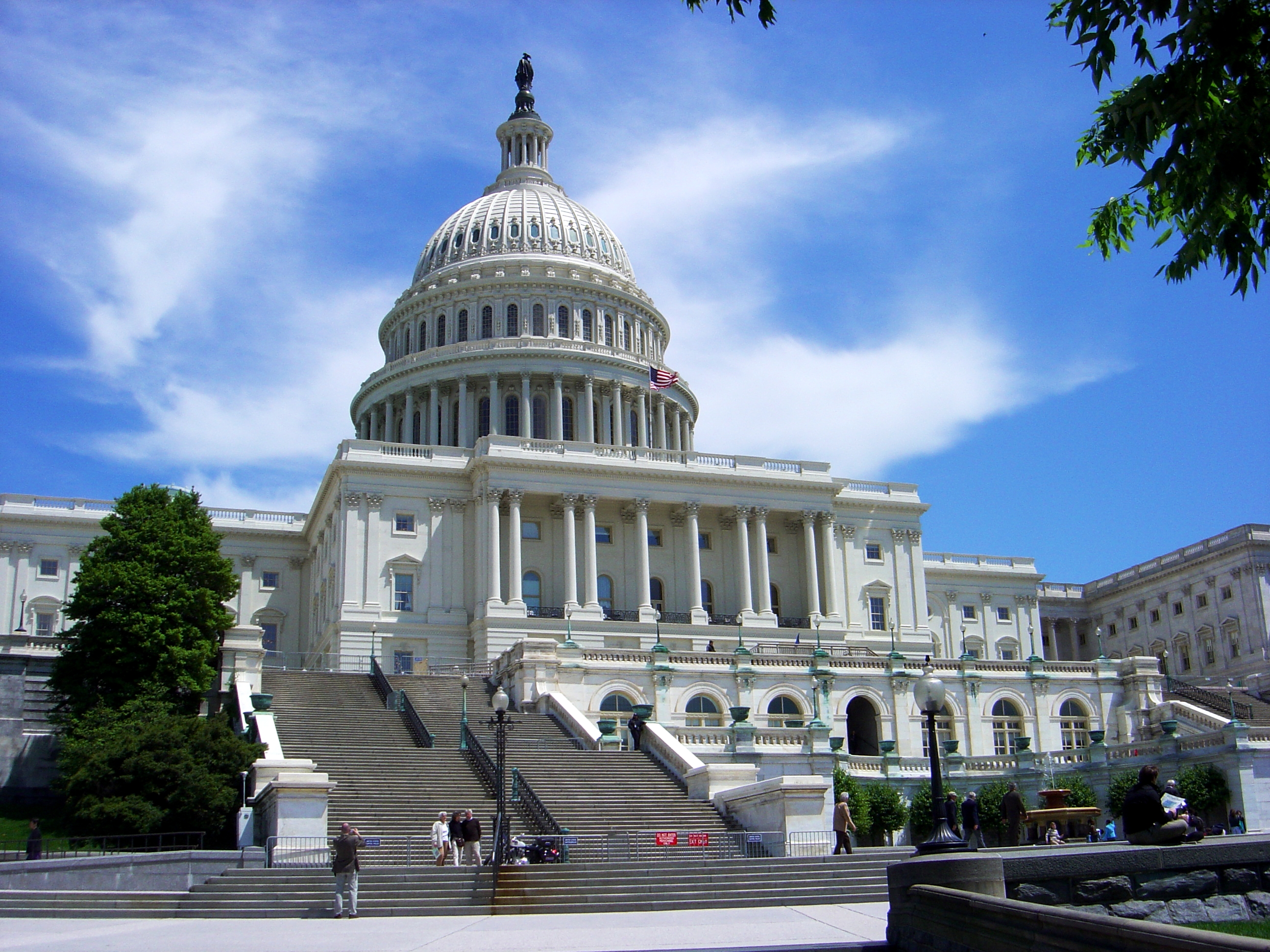
What is probably the decisive battle in the war to reform our health insurance system is currently being fought behind closed doors. It is not a battle over regulation, the public plan, or funding. It is the fight to include in the budget a provision to pass health care reform using reconciliation if a bipartisan bill fails. Reconciliation would allow health care reform to pass with a simple filibuster-proof majority.
Currently (without reconciliation) the Senate Republicans have an enormous influence over health care reform. If they can keep all 41 GOP senators together, they can filibuster any health care bill. Barack Obama has made health care reform his first of several major initiatives he wants to tackle. If health care reform fails, it would mean Obama is a weak and ineffective president. It would destroy his political capital and cripple all his other reform plans.
Obama needs to pass health care, and the Republicans know it. They know walking away from a bipartisan bill could hurt Obama more than themselves. Without reconciliation they could force any health care bill dramatically to the right despite their small numbers.
Including a health care reconciliation provision completely alters the political dynamics. With reconciliation the Democrats don't need any Republican support to pass health care reform. Without reconciliation, if the Republican senators walked away from a bill it would kill it. Now if Republicans refuse to compromise on health reform, it will end up being written by the left wing of the Democratic Party.
Reconciliation is the key to passing progressive health care reform. It is the massive stick which forces Republicans to make large compromises or live with a bill written entirely by Democrats. By including reconciliation and maintaining enough unity, the Democrats will be able to pass any health care reform they want.
The Cayman Islands Will Pay for Health Care Reform

It currently appears that the two biggest obstacles in this year's effort to reform health care will be deciding if it will include a public plan option and how to pay for it. Deciding on how to pay for health care reform could easily be the more contentious issue. Finding a consensus on including and/or structuring a public plan has the advantage of being a fairly narrow policy decision. Deciding on how to fund health care reform suffers from an over abundance of choices.
There are nearly limitless combinations of tax increases, dedication changes, program cuts and fees that could be used to pay for health care. The Obama administration originally proposed reducing the tax dedication rate for high income tax payers. Some Senators have floated the idea of capping the tax exemption for health care benefits over a certain level. Others have advocated for creating a federal value-added tax. Any of those three or a combination of the three could work. The problem is that there are too many workable options and no reason for legislatures to form a consensus around anyone of them.
Hopefully, Congress will be able to come up with a good, useful way to properly fund health care reform. There is a definite possibility it will not. If a real source of funding cannot be decided on, I think a likely way to fund the reform on paper would be to go after offshore tax havens.
The IRS estimates offshore bank accounts are used to illegally avoid paying an estimated $100 billion in annual taxes. That is same amount of money that health care reform is estimated to cost. I know that given the economic, political, enforcement, and foreign policy reality, only a fraction of that potential $100 billion in unpaid taxes might ever be collected. The point would not be to actually pay of health care reform but only to be able to claim that they have found a revenue source to pay for it.
The Need for The “Norm Coleman Law”

Norm Coleman has lost the Minnesota senate race. There is no chance that he will eventually have the election results overturned. Yet Norm Coleman, with the full support of the Republican Congressional leadership, plans to keep appealing the election results for as long as he possibly can. The Republican party has no expectations that Coleman will have the results overturned. Their goal is purely to delay the seating of the duly-elected Senator Al Franken for as long as possible. Republican Senator Cornyn claimed that a full set of appeals could deprive Minnesota of one of its senators for years.
There was a time when abusing the slow pace of the judicial system in this way to thwart the basic democratic principles of our country would have been unimaginable. It may have been due to tradition, a less partisan time, or simply a greater sense of shame. If Al Franken is not seated after the Minnesota Supreme Court rules on Norm Coleman's election appeal, it will be the breaking of the flood gates for a dangerous deterioration of our democracy.
Already Coleman has delayed the seating of Franken by 4 months. Even if the state supreme court moves quickly, it could easily take another 2 months. Appealing the election all they way through the many levels of the federal court system could easily take a year. The legal battle, if not stopped, may cost Franken a third of his senate term. If the same abuse of the courts is used in a House race it could delay a congressman from even taking office before the next election.
Already Coleman has delayed the seating of Franken by 4 months. Even if the state supreme court moves quickly, it could easily take another 2 months. Appealing the election all they way through the many levels of the federal court system could easily take a year. The legal battle, if not stopped, may cost Franken a third of his senate term. If the same abuse of the courts is used in a House race it could delay a congressman from even taking office before the next election.
Every two years there are several close results in the hundreds of House and Senate races. A difference of a few thousand votes is not uncommon but nearly impossible to be overturned by a recount and examining of rejected ballots. It is close enough that the loser would be entitled to a recount according to many state laws. Normally the loser graciously concedes defeat, but Norm Coleman and the Republican leadership are setting a dangerous precedent. Either side could choose to circumvent democracy by delaying the seating of the other party's congressman or senator for as long as possible. Abusing the judiciary system could leave multiple seats unfilled for months and years after an election.
Using state recount laws and court appeals to stop the seating of a duly-elected member of the other party is incredibly dangerous. I can easily imagine a time when either the House or Senate is evenly divided. The outcome of a handful of close elections could shift the balance of power. Using the same delay tactics would enable a party to cling to the majority power for months or years after losing the election.
It is very important that a law is passed to prevent this dangerous abuse before it gets out of control. The law could be structured two ways. It could require which ever candidate has the most votes after the state supreme court rules to be temporarily seated while the federal appeals process proceeds. The other option is to treat any federal appeals about a federal office like legal dispute between states. This would require that after the appeals to the state courts are exhausted, the only remaining option is to appeal the case directly to the Supreme Court of the United States. Either of these laws would still mean that a candidate could be delayed from taking office for months but not for years. If we hope to protect the principles and dignity of our democracy we need to pass a new “Norm Coleman Law”.
Senator Grassley Doesn't Want You To Have Cheap Health Insurance Because It Would Make it Hard to Find Cheap Health Insurance

According to Radio Iowa, Senator Grassley recently addressed his constituents about health care reform. I'm glad to hear him claim that he is committed to getting health care reform passed this year. Yet, I'm very disappointed that he is determined to make millions of Americans continue to pay too much for health insurance.
At a local forum Grassley referenced a new study by the Lewin Group claiming, “It's quite obvious, if you have 119 million people opt out, you aren't going to have affordable coverage for those that are left in a private health care system”. From his statement I can only conclude Grassley trusts the accuracy of the Lewin Group study and therefore is against allowing Americans to save 30% on their health insurance.
The Lewin Group studies what the effect would be of allowing Americans to choose to buy private health insurance or buy a public option which would be modeled on Medicare. The study concluded that the public plan would provide cheap, low hassle, quality health insurance for a fraction of what private insurance costs. The public plan would be roughly 30% cheaper than a comparable private plan. The “problem”, as Grassley sees it, with the public plan is that it would be such a preferable product that millions of Americans and companies would love to voluntarily switch to it. Grassley is against the public plan because he thinks too many people would like it.
Let's make this very clear: Grassley believes that having public plan based on Medicare would allow Americans to choose an insurance option which would reduce their premiums by 30%. He is against the public plan for the reason that most Americans and companies want to save money and no longer be forced to do business with private health insurance companies. So what he was saying was: he against offering Americans guaranteed affordable, effective health insurance because it could possibly make it harder for Americans to get affordable health care from private insurance companies. Grassley must decide if he wants to help the American people save money or help the health insurance industry protect its profits.
Free Trade Will Destroy Our Planet or Our Economy

Barring a nearly-magical unforeseen technological development, the only effective way to slow global warming and get our nation on a path to energy independence is to tax the production of CO2. Most politicians still refuse to accept this fact and would prefer to implement a confusing array of subsidies, renewables standards, and research grants. These half measures normally end up being ineffective, counterproductive, or overly expensive. Instead of letting politicians choose winners and losers, putting a tax on carbon will allow the market to determine the cheapest way to reduce production.
There are two main problems with a carbon tax (or an indirect carbon tax through cap and trade). The first is that any carbon tax would be similar to a sales tax and therefore be a regressive tax. Fixing this problem is fairly easy. The money raised from a carbon tax could be used to offset other regressive taxes such as a payroll taxes or state sales taxes. The money could also be returned in the form of a flat, across-the-board tax credit or refund.
The much larger problem with any carbon tax is that it could end up devastating America's manufacturing sector. The tax needs to be high enough to encourage utility companies, manufacturers, and consumers to change their behavior. But if the tax is set at an appropriate level, it will cause the exodus of energy and carbon-intensive jobs to emerging markets without a carbon tax. The worldwide production of CO2 will not dramatically improve, but millions of American jobs would be moved overseas.
The solution to this problem is carbon tariffs. Any product imported from a non-carbon tax country would need to have the amount of CO2 created in its production calculated. A tariff would be placed on the good equal to what that amount of CO2 would cost an American company. Most of the money earned from the carbon tariffs would go to the normal carbon tax fund and some of it would be used to provide carbon tax deductions to American exports. American companies that export to non-carbon tax countries would get a tax deduction equal to the increased cost from the carbon tax to keep their goods on an equally competitive footing. As other nations adopt similar carbon taxes, we could eliminate carbon tariffs and carbon deductions.
The major problem is that our current free trade treaties prevent us from imposing the necessary carbon tariffs. Ideally, all countries would adopt the same carbon tax at the same time, but that is a fantasy. Without carbon tariffs, any carbon tax or cap and trade plan would hurt the American economy without dramatically helping the planet. If we want to address energy independence while slowing global warming, we must renegotiate or cancel our free trade agreements.
Failure to create a carbon tax will hurt our planet. Failure to impose a carbon tariff as part of any carbon tax will hurt our economy. And our free trade treaties prevent use from creating the needed tariffs. As a country we must choose between our planet and our economy, or our free trade treaties. I think it is clear which one should be abandoned.
Dear Krauthammer: I Think the Car Warranties Would Be the Least Shocking Thing for Madison
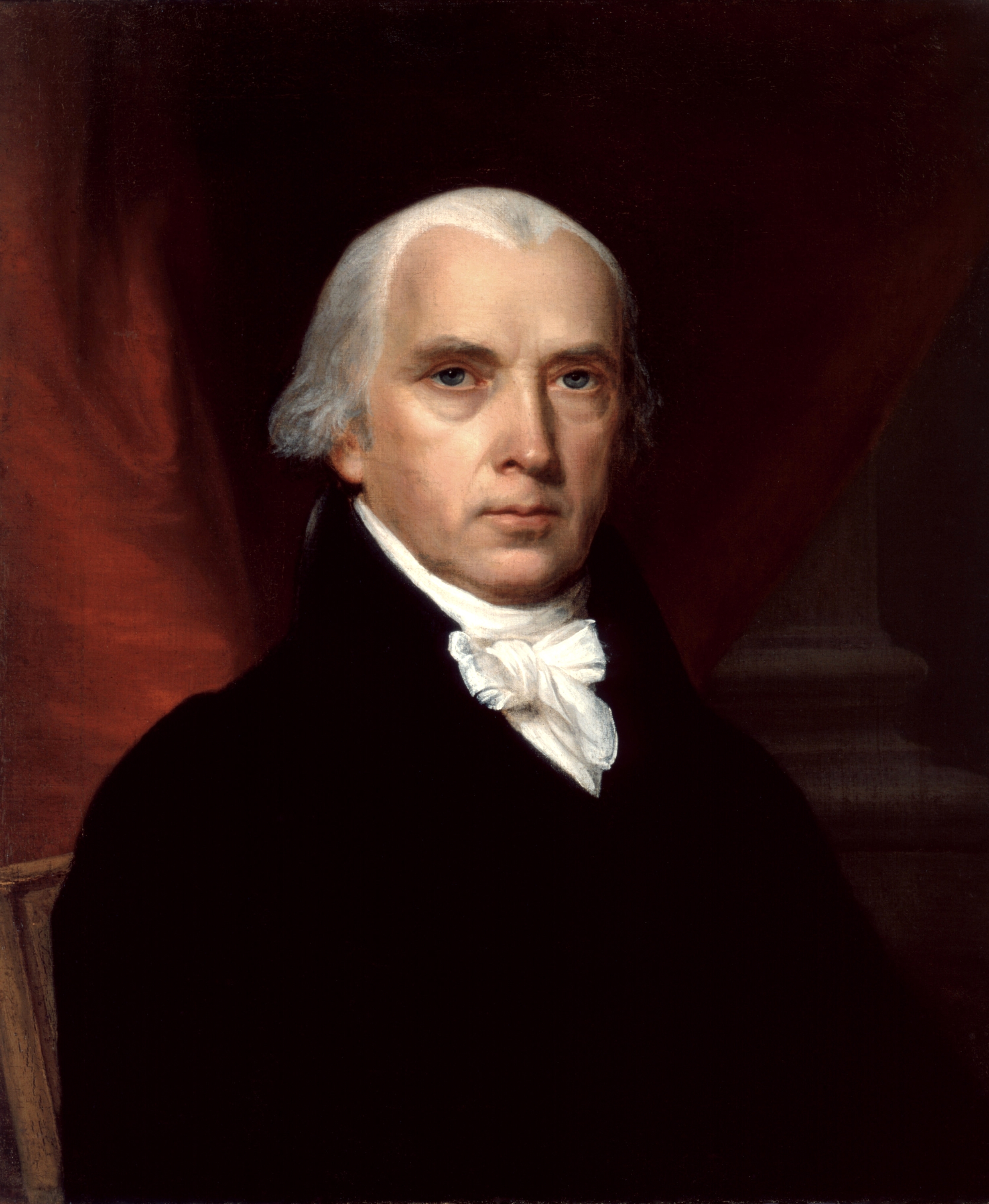
Charles Krauthammer wrote that he believes after explaining to James Madison what a car is, he would be shocked how the Constitution would allow Obama to unilaterally decide to guarantee car warranties. Really, Mr. Krauthammer? You think of everything that the Constitution has allowed to happen in the past 100 years, it would be the car warranty incident which James Madison would notice?
I think he would probably be more shocked to learn that the Constitution allowed a negro to be president, a woman to be speaker of the house, and a heretic to become senate majority leader. He would be disappointed to discover that the senate rule of unlimited debate has become some twisted tool to force all bills to pass by a 3/5 supermajority. He would be amazed that the Constitution protected the right of “coloreds” to marry whites and made being gay legal. He would be unable to believe that the Constitution now protects the right of people to make hardcore-tranny-bondage-orgy porn. The fact that only 4% of people are farmers would completely freak him out.
He would be shocked that there is a federal income tax and even more perplexed that we have signed treaties stopping us from using tariffs. I can't even imagine how he would feel about how the government has spent billions to make cannabis illegal, given that he wrote the Constitution on hemp paper and George Washington grew it. I don't think he would be happy that while fighting two overseas wars, we decided to cut taxes. Nor do I think he would like it that we have 1% of all Americans locked up in prison. Having the most expensive standing army on earth would probably scare him.
I love our Constitution and our founding fathers. I think George Washington will go down as the most morally important man in history, and I think our founding fathers were the among the most enlightened men of their time. But they were still men of their time. The Constitution is not and never was prefect. It protected slavery and allowed denying women the right to vote. It is just foolish to complain about current policy positions because you think an 18th century plantation owner who wrote a constitution for a small agrarian society would be against it.
Subscribe to:
Posts (Atom)
LinkWithin
