Did CBO Determine the HELP Public Plan?

Today, draft language of the Senate HELP Committee's public plan was leaked to Politico. Overall, the HELP public plan is very similar to the “weak but workable” or “level playing field” public plan promoted by Senator Chuck Schumer. I suspect the “strong” Medicare-based public plan may have been dropped primarily for political and not economic reasons. But it is possible that the Congressional Budget Office (CBO) had a large role in deciding the structure of the HELP Committee's public option for two important reasons.

The first reason is optics. Back on May 27, the CBO released a briefing outlining how they would define possible changes to our health care system. They stated what proposals would and would not reflect on the federal budget.

In CBO’s view, the budgetary treatment of a public plan would depend critically on who bore the financial risk. If the federal government stood behind the plan financially, then its expenditures should be considered federal outlays, and the payments collected for premiums should be considered as either federal revenues or as offsets to outlays.

And,

Specifically, if a public plan dominated an exchange-based market, then that component of the health insurance system would, in practice, be largely governmental. In that case, all of the transactions of the exchange should properly be considered part of the budget.

It is very possible the CBO would predict that a strong public plan would “dominate” the exchange and therefore decide to classify the entire exchange as part of the budget. While this would not effect the cost of the bill, it would dramatically change the optics. It could led to the CBO declaring health care reform a massive tens of trillions of dollars expansion of the federal budget.

The other possible reason is about cost reduction. If the CBO is unwilling/unable to quantify how the competition of the public plan would drive down the price of private insurance, a “strong” public plan would make reform legislation dramatically cheaper than a “weak” plan. If the CBO concludes that any national public option would do an equally good job of bringing down the cost of private insurance, the savings difference will be much less. (Federal subsidies will be based on the average of the three cheapest plans offered. Reducing the price of all plans could be more important to overall savings than just offering one cheaper plan.)

In the end, I think the CBO scoring will be the biggest single event in the whole reform debate. If the CBO says a specific public plan will reduce the cost of reform by hundreds of billions, I think it becomes politically unstoppable. If a public option is declared a massive expansion of government or found to do little to control cost, it will be in serious jeopardy. The CBO scoring could result in the debate over the public option shifting from an ideological battle to a fiscal one.

Rumpelstiltskin and the Democratic Leadership

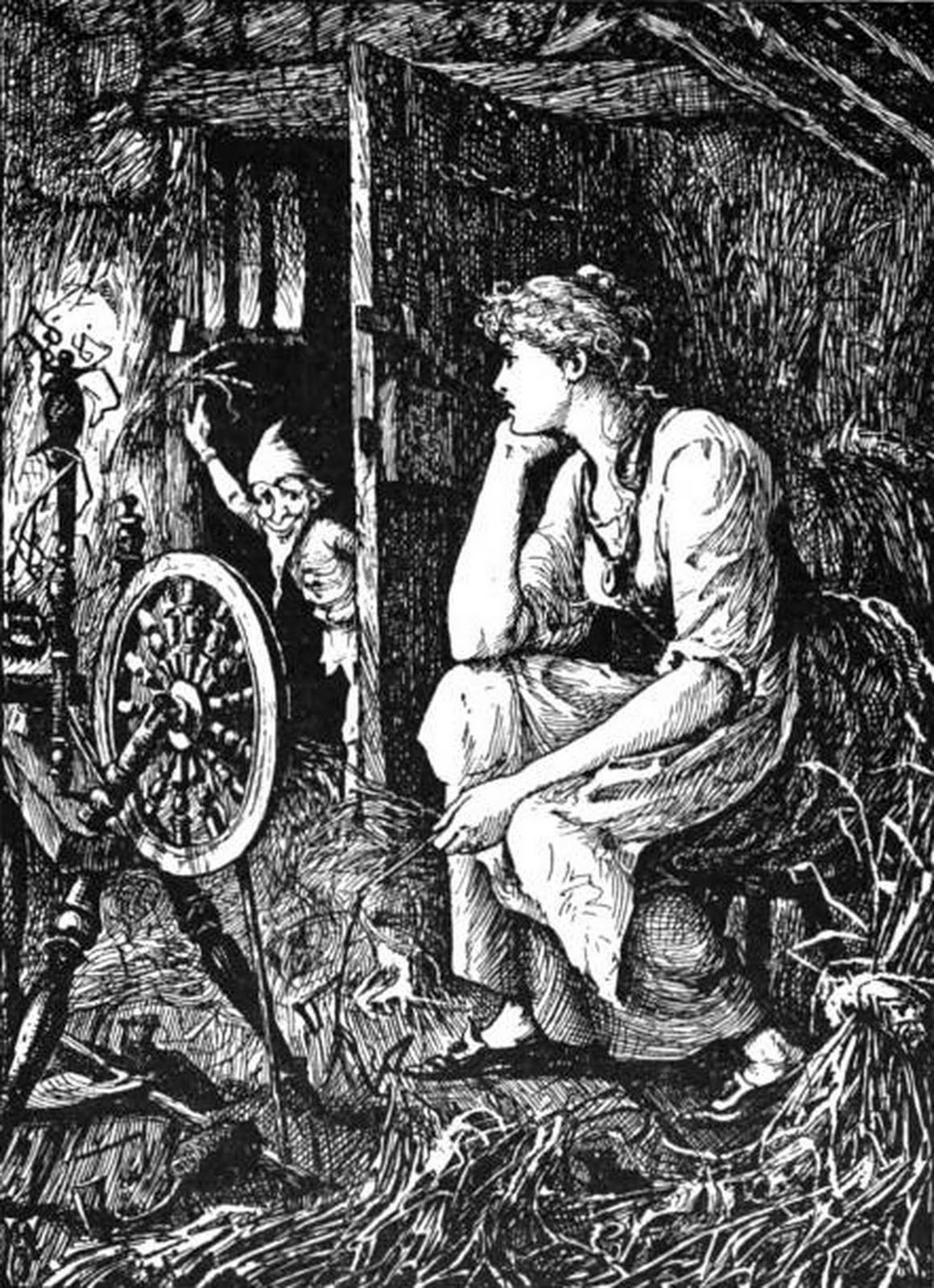
The leadership of the Democratic party reminds me of the classic fairy tale Rumpelstiltskin.

In 2002 and 2004, the party's leadership was like the miller's daughter. Trapped in the castle tower with the seemingly impossible task of trying to spin straw into election gold. In desperation, they turned for help to an ugly dwarf (the young, ideological, progressive grassroots). While the miller's daughter only promised Rumpelstiltskin her first born in exchange for his aid, the party leadership promised much more. They promised the progressives almost anything and everything: Ending torture, closing Guantanamo, repealing Don't Ask Don't Tell, universal health care with a strong public plan, the Employee Free Choice Act, troops out of Iraq, etc.

To the surprise of almost everyone, the progressive grassroots succeeded beyond anyone's expectations. They turned the pile of useless straw into political dominance gold. The netroots raised on unprecedented level of political donations with small online contributions. In four years, the Democrats went from 45 Senators to 60, won a huge majority in the House, and elected the first black president with a large mandate.

Now that the Democrats are at their most powerful in a generation, their Rumpelstiltskin has come to claim his prize. Like the miller's daughter, the elected Democrats are doing everything they can not to pay the price they promised. They are struggling futilely to guess the dwarf's true name (or find the proper PR spin to justify their broken promises and complete sell-out compromises). They hope some magic phrase will make their commitment go away.

The Democratic senators say:
“We can't pass the EFCA we all co-sponsored, how about a compromise that makes big business happy?”
“We can't give you the public plan we promised, how about useless co-ops instead?”
“We can't provide full federal benefits to same sex couples, how about help covering your partner's moving expenses?”
“We don't feel like dealing with Don't Ask Don't Tell right now, how about maybe in five years?”


The biggest difference between our current political reality and the classic fairly tale is that there is no magical out. The party leadership can't just say “Rumpelstiltskin” and have all debts canceled. The progressive grassroots expected to claim their prize, and party leadership has decided not to pay. In real life, debts unpaid are rarely forgotten or forgiven.

Senator Snowe: Letting People Choose Cheap Health Care is Unfair To Large Corporations

Senator Olympia Snowe does not want health care reform to include a public insurance option that would be available right away. She wants it to be “triggered” only if private insurance companies fail to reduce cost. She claims it would be “unfair” to make large corporations compete with a cheaper public insurance option.

She claims, "If you establish a public option at the forefront that goes head-to-head and competes with the private health insurance market ... the public option will have significant price advantages."

She admits the public plan would be cheaper and that is why she won't let the people of Maine who are struggle to afford health insurance be about to choice it. She feels it is much more important to give for-profit insurance companies another chance, than provide Americans affordable health care.

What is “unfair” is to deny your constituents a cheap affordable quality public insurance option, because you are afraid it might hurt large health insurance corporations.

I'm sorry Senator. I thought your job was to do what was best for the average people of Maine, not protect multi-billion dollar companies like Aetna, Cigna, and Wellpoint.

Bipartisan Health Care Reform Nearly Dead?

During the Sunday talk shows the most important line came from White House advisor David Axelrod. His statements indicate the chance of bipartisan health care reform is becoming increasingly remote.

On This Week, David Axelrod redefined bipartisanship as simply including Republican ideas in the bill. He only “hopes it will come with Republican votes.”

This is new willingness on the part of the White House to go it alone on health care reform. I suspect what happened is the White House saw just how watered down legislation would need to be to get Republicans' support and was very not happy.

I looked at a draft outline of the “bipartisan” Senate Finance Committee's bill, and it is terrible. All the recent reporting has indicated that it has only gotten worse.

I don't know if the Obama administration concluded that the Finance Committee's bill would be unworkable politically, practically, or both. On a political level, there are probably enough liberal members of the House and Senate who will kill any reform resembling the Finance Committee's bill. They would rather take the “swiss cheese” version of a good bill that would be the result of using reconciliation over the complete version of a bad “bipartisan” bill.

The White House may also be concerned that the Finance Committee's bill would on a practical level be unworkable. It would be implemented too slowly, not do enough to make health care affordable, and not slow the growth in cost. If Obama signs a health care “reform” bill that could still leave low income people with medical bills in the ten of thousands, it could discredit the reform, the president, and the party.

No one yet knows what final shape the bipartisan Finance Committee's health care bill will take, but it is not going to be pretty. Obama has said he would rather have 85% of what he wants with 70 votes than 100% with 52 votes. The problem is any bill that can get 70 votes in the Senate will probably be closer to 35% of what he wants. Obama needs to ask himself if that is good enough for him personally, and also if he will be able to sell it to the more progressive members of his party. Axelrod is indicating the answer might be no.

Obama To Progressives: Stop Working to Elect Democrats


While President Obama has yet to tell his progressive grassroots supporters directly, his words and actions make it clear that he wants progressives to stop working to elect Democrats. The problem is that Obama has a strange, overwhelming bipartisanship fetish. Apparently, getting good legislation passed, truly fixing our health care system, and providing Americans with the best possible care at the lowest possible price is all less important than the approval of a handful Republican senators.

Obama has said so himself multiple times: “The president has told visitors that he would rather have 70 votes in the Senate for a bill that gives him 85 percent of what he wants than a 100 percent satisfactory bill that passes 52 to 48.” In other words, Obama is happy to make our health care system 25% worse solely for the approval of Republican Senators Grassley, Hatch, and Snowe.

The progressive grassroots community worked hard over the past four years to give the Democrats their largest majority in the Senate in decades. Once Al Franken is seated, the Democrats will have a filibuster-proof 60 seats. Despite massive wins (and dismal poll numbers for Republicans), Obama is obsessed with watering down important legislation to win a few votes from any Republican senators.

Since Obama values “bipartisanship” more than getting the best possible legislation passed, progressives are hurting their cause by working to elect Democrats. Every Democratic Senator elected makes the Senate Republican Caucus smaller and more conservative. That means legislation needs to be pushed even farther to the right to gain the support from an ever-shrinking pool of GOP Senators.

As long as Obama values the votes of a few Republican senators more highly than fulfilling campaign promises, grassroots activists should be working to elect moderate Republican senators instead. Obama's action makes it clear that the progressives should support Republican Mark Kirk for Senate in Illinois and Republican Mike Castle for Senate in Delaware.

If every bill is only going to be as liberal as the most moderate Republican senator, working to elect Democrats is counterproductive. Obama should be focused on fixing the country, not undermining the Democratic party by forfeiting to a few Republicans the incredible power of shaping legislation just to gain the label “bipartisan”.

Washington Post Falsely Reports On Its Own Poll

The Washington Post released a poll today that dealt with health care along with several other issues. Unfortunately, Ceci Connolly and John Cohen, who wrote the article about the poll, failed to properly read it.

The Washington Post story stated, "In the new Post-ABC poll, 62 percent support the general concept [of a public option], but when respondents were told that meant some insurers would go out of business, support dropped sharply, to 37 percent."

That would be an interesting statistic. The problem is that it is incorrect and does not exist. What the poll actually asked respondents was: “21a. (IF SUPPORT) What if having the government create a new health insurance plan made many private health insurers go out of business because they could not compete? In that case would you support or oppose creating a government-run health insurance plan?”

The use of word many instead of some is very important. If you think I'm being a semantic stickler, let me ask you a question: Would you be less inclined to go to Baskin Robbins if I told you they were planning to eliminate some of their 31 flavors, or if I told you they were planning to eliminate many of their 31 flavors?

“Some” would make me think they are dropping the 3-4 least popular flavors. If I heard “many,” I would think they are eliminating around 14-19 flavors.

Polling is a very delicate business. Small changes in phrasing will have a dramatic impact on polling results. Given what I know about polling, if the Post poll had used “some” instead of “many,” the number could easily have been 10 percentage points higher. In the future, if you plan to write a story about a poll, I recommend taking the time to read it first.

A Fair Compromise for Conrad's Co-op Plan


Senator Conrad is still pushing his idea of eliminating the public plan and only creating a “co-op plan” instead. But he is willing to greatly change his original proposal to gain the support of Senator Schumer.

Ryan Grim at HuffingtonPost.com is reporting that Senator Conrad would now support a single national “co-op”. For the first few years it would also be overseen by a federal board appointed by the Health and Human Services Secretary. (If it is controlled by the public sector how is it not a public plan?)

Senator Conrad wants to force the co-op to eventually lose its federal oversight board, while Senator Schumer wants the board to be permanent. Forcing the co-op to change (or not change) its governing oversight is in direct opposition to the basic principle of a cooperative.

Instead of having a small group of senators forcing millions of future co-op members to change the way they run their organization, they should leave it up to the members. The whole point of a co-op is to allow members to vote on the direction of the cooperative.

It seems the only smart, fair, and appropriate compromise is to put the issue up for vote by the members. For example, The cooperative would lose its federal oversight board only if 50% plus 1 of all members mailed in a ballot demanding the change.

Public Option Genie Will Soon Be Out of the Bottle

Very soon, the CBO will release a score for the House Democrats' draft health care legislation. Their bill contains a relatively strong self-financing public option. My research has led me to conclude that including a strong public option will result in the bill being scored several hundred billion dollars cheaper.

The House bill is very similar to the draft legislation from the Senate HELP committee. Both fix the size of credits, which would be given to help individuals buy health insurance, to the "reference premium". In both, the "reference premium" is the average of the three cheapest available plans. I explained previously how offering a much cheaper public option would reduce the cost of the "reference premium" and dramatically lower the amount in subsidies the federal government will need to pay out.

While the two bills differ slightly in who is eligible for subsidies, (House is people between 133%-400% of FPL, Senate HELP is 150%-500%) the general effect of including a strong public option should be the same. The strong public option could easily reduce a bill's score by $100-$300 billion.

Once the savings of a strong public option is scored, it should dramatically change the nature of the debate. Already an overwhelming number of Americans support the public option. Once it is clear it will also save the country hundreds of billions, it will be hard to argue against it on vague ideological grounds. Members of the Democratic leadership, who once thought they would be able to use the public option as a bargaining chip, will quickly find out that including a public plan is the only way to receive significant grassroots support.

Soon the public plan genie will be out of the bottle, and it is going to be very difficult to put it back in.

Sold Out To Phrma By Senator Baucus, Hundreds of Billions Wasted


Recently, Senator Max Baucus proudly unveiled a new “deal” with the pharmaceutical industry. They committed to reduce the cost of drugs to the American health care system by a total of $80 billion over the next 10 years. Federal government spending would be reduced by only a fraction of that.

Many have hailed this announcement as a great achievement in the effort to reform health care; it is not. The $80 billion is in reality an very tiny drop in the potential savings bucket. There are hundreds of billions of dollars that the federal government could easily save in pharmaceuticals with real reform (allowing the government to directly negotiate the price of drugs). If this “deal” from the pharmaceutical industry is instead of real reform, it is no deal at all. Senator Baucus has not saved the taxpayers money; he has sold them out.

The United States pays more per capita for medical drugs than any other industrialize nation. In 2003, France (the second biggest spender on drugs per capita) paid just 83% of what the United States paid per capita on drugs. Canada paid just 70%, Germany 60%, and Australia spent less than half (48%) of what our country spent on medical drugs.

Even though Canada spent only 70% per capita of what the United States spent on drugs, Canadians on average have 19% more prescriptions filled. Canada spends so much less on medication because it allows the central government to directly negotiate the price of prescription drugs (something which is banned in this country). Patented drugs are on average between 35% and 45% cheaper than here in the United States.

Medicare Part D is the federal program which helps seniors purchase medication. It cost the government roughly $36 billion last year. The program does not allow the federal government to negotiate with pharmaceutical companies, nor create a government-run “public option” as one of the many competing prescription drug plans.

Families USA found that for the 20 most common prescription drugs, the cheapest Medicare Part D plan paid 58% more than the Veterans Affairs (VA). The VA is a large government program which can use its size to directly negotiate with the pharmaceutical companies.

The evidence is clear that if the federal government were allowed directly negotiate drug prices with the pharmaceutical companies, it could dramatically reduce their cost. It is easy to imagine how the federal government could use its power to reduce the price of drugs by 20%-40%.

There are many ways the federal government could drive down the cost of drugs (only some are listed below):

1. It could create a nationwide default “public option” prescription drug plan to compete with private plans as part of Medicare Part D.

2. It could eliminate the Medicare Part D program and give the HHS the power to negotiate prescription drug coverage for all Medicare and Medicaid enrollees.

3. A single government prescription drug plan, which would be open to Americans, could be created to directly negotiate prices.

4. The Federal Employee Health Benefits Program could create a single prescription drug program to negotiate drug prices for all federal employees.

5. The common pratice of re-importating prescription drugs from countries whose governments do directly negotiate prices could be made legal.

Regardless of how the federal government reduces the price of prescription drugs, it could easily reduce the amount it pays for drugs by 20%. Reducing the amount the government pays for drugs by over 40% is well within the realm of possibility.

Using some back of the envelope calculations: A reduction of only 20% in drug prices could currently save the federal government around $13 billion in one year. If it was part of a 10-year $1 trillion dollar health care reform package, it would make the legislation around $150 billion cheaper. *

If the price of drugs in America were on par with Canada, the savings for the government would be roughly $20 billion in one year. If part of a 10-year reform bill it would make the legislation around $250 billion cheaper.

If health care reform could bring drug prices in line with Australia, Netherlands, Sweden, Finland, and Denmark (which spend less than half of what the United States does per capita on drugs) the savings would be almost double.

The pharmaceutical industry's promise to help people save $80 billion over ten years is health system-wide. The savings for the federal government will be only a fraction of that. If we are extremely generous, let's say it would save the federal government $40 billion over the next ten years. That is less than 1/5 of the savings possible if the federal government was able to directly negotiate drug prices and get rates similar to what Canada receives.

What our country does not need is for senators (who have received hundreds of thousands in donations from the pharmaceutical industry) making secret billion dollar deals behind closed doors. What we need is for our government to be finally allowed to use its large market share to directly negotiate with drug companies to save the taxpayers real money. This is not an triumph for real reform, it is a sign that the American people are being sold out on the cheap.

*My calculations can be made available by request. If anyone has a policy study with more refined number I will update my article.

Nina Easton Has No Idea What She is Talking About


Visit msnbc.com for Breaking News, World News, and News about the Economy


Last Sunday on Meet the Press, Nina Easton of Fortune Magazine, referred to the CBO scoring of the incomplete Senate HELP Committee health care reform bill. She repeatedly claimed that the CBO scoring dealt with the “public plan.” It did not.

She said, “And I think the, the big speed bump this week, of course, was that CBO, Congressional Budget Office study that said that the costs of a public plan are going to be well beyond what they expected.”

This is incorrect because the CBO study did not include the public plan.

She later in the show said, “And again, going back to that CBO study, showed that 16 to 23 million people would lose their private or other type of health insurance if that public plan went through.”

Once again the CBO did not study the public plan. The CBO determined that 16 to 23 million people would lose their current coverage if the health care exchange was put in place without a employer mandate. In the CBO study, the health care exchange did not include a public plan.

If Nina Easton had bothered to read the CBO study or even basic reporting about the CBO study, she would easily know that it did not study the public plan. Either Nina Easton has no idea what she is talking about, or she is purposely spreading lies about the public plan. Either way Nina Easton has proven that she is not qualified to discuss health care policy on a “news” program. Unfortunately, David Gregory did not correct Ms. Easton incorrect statements.

Baucus's Health Care Plan Is Worse Than The Health Insurance Industry's Plan

Ezra Klein at the Washingon Post released a health care reform draft proposal from the Senate Finance Committee. The plan is not just bad -- it is worse than I would have ever imagined it could be. Just how bad is Senator Baucus's draft proposal? It is worse than the proposal put forward by America's Health Insurance Plans (AHIP). That is correct -- the health insurance industry wrote a better proposal than the Democrats on the Senate Finance Committee.

For the most part Baucus's proposal is almost identical to that of the AHIP lobby. Both do not include a public option and would offer a bare bones insurance plan. Both have an individual mandates, a form of community rating, and some type of health insurance exchange. Both would also limit out-of-pocket cost based on the current HSA standard. In the few places the proposals differ, Baucus's proposal is in fact less generous than the AHIP.

Paying for private insurance

Baucus Proposal – People making below 300% of the federal poverty level (FPL) would get subsidies to help buy insurance. If you make more than $31,500 you are on your own for the full cost of insurance.

AHIP Proposal – People making below 400% of the FPL would get subsidies to help buy insurance. Also everyone buying private insurance would get to deduct the full cost of their plan.

Medicaid Eligibility

Baucus Proposal
– Every adult below 100% of the FPL would be eligible for Medicaid. Children below 133% of FDL would be eligible.

AHIP Proposal – Every adult below 100% of the FPL would be eligible for Medicaid. Children below 300% of FDL would be eligible.

The conclusion is simple. To claim that the health care reform plan put forward by the Democrats on the Senate Finance Committee was written by health industry lobbyists would be an insult to the lobbyists. Their plan was slightly better and did more to help average Americans buy health insurance.

Co-op In Name Only


In an AP story, there is a very interesting small piece of news. The report indicates that Senator Baucus is pushing hard to abandon the public option and create a non-profit cooperative instead. What is new, though, is that “Grassley said nothing was finalized yet, and indicated the sticking point was Baucus' insistence that the federal government play a behind-the-scenes role.”

Just how much power the federal government would have “behind the scenes” could dramatically change the nature of the co-op. It is possible that Baucus' goal is to produce a co-op in name only or a true public plan with just a more palatable name.

There are several ways to create a co-op that is directly or indirectly controlled by the government. You could, for example, write the co-op's charter so that its procedures, coverage, and payments are directly tied to Medicare. You could also create a government “health insurance best practices” board that would give “recommendations,” and the co-op would just happen to follow them exactly.

A co-op in name only is unlikely to win the support of almost any Republican, but it might provide the political coverage that a few moderate Democratic senators and two to three Republicans might need, while still winning the support of more liberal businesses.

If Senator Baucus eventually gives into Senator Grassley's demands and makes the co-op completely useless as a replacement to the public option, I predict there will be outright war within the Democratic party. The public option is simply too important to the party's grassroots. It is the one issue that can really rally supporters to make calls and knock on doors. If there is no public option, instead of working hard to pass reform the grassroots may end up killing it.

Public Option Could Save $250 Billion

Now that I have some official numbers from the CBO I can do a better analysis of just how much the public option would save the taxpayer. Since in the HELP committee's bill, the size of government subsidies given to individuals to buy health insurance is based on the average of the three cheapest plans (the “reference premium”), offering a cheaper plan would reduce the size of the subsidies given out.

I'm assume, as is widely agreed, the public option would be the cheapest plan offered. If there was a strong public option (basically a full Medicare opt-in) it would be about 30% cheaper. If there was a weak public option (the Schumer plan) it would be about 10% cheaper.

With the weak public option the “reference premium” would be 5% less, and the total size of subsidies should be reduced by roughly 7-10%. That means a weak public option will make the HELP committee's health care reform bill roughly $90-130 billion cheaper.

With the strong public option the “reference premium” would be 10% less, and the total size of subsidies should be reduced by roughly 15-20%. That means a strong public option will make the HELP committee's bill roughly $200-250 billion cheaper.

I have not seen the details to Conrad's co-op plan, (because they do not exist) but similar co-ops currently operating are not significantly cheaper than other private insurance plans. Conrad's co-op should have almost no impact on reducing the cost of the bill.

*all numbers are rough estimates and can change dramatically based on the size of subsidies, eligibility, and structure of the public option.

AMT 2: Health Insurance Tax

The Alternative Minimum Tax (AMT) is perhaps the greatest example of how dysfunctional and cowardly the United States Congress can be, but a new tax on health insurance may soon steal the title.

The AMT was originally created in 1969 to target the 155 incredibly high-income households. Because the AMT was not indexed to inflation (and numerous other changes to the federal tax code), if it were allowed to go fully into effect, it would create a tax increase for millions of Americans.

The United States Congress is extremely reluctant to raise the taxes of millions of Americans, especially in the haphazard way the AMT would. If you think Congress would simply repeal or fix this unpopular tax, you are wrong. Even though the AMT has not been fully in effect for years, and everyone in Congress agrees it will never will again, Congress is afraid to fix or eliminate it. "Fixing" the AMT would greatly increase our nation's “projected” deficit. Instead, Congress “patches” it every year so that it can pretend that the AMT will go into effect next year.

A new tax on health insurance benefits may soon follow the same childish accounting trick as the AMT. The AP is reporting that the Senate is planning to tax some health insurance benefits to pay for health care reform. The problem is that this tax on health insurance benefits will not go into effect until 2013.

This new tax on health insurance benefits would effect millions of middle-income Americans. It is politically difficult enough to convince Americans to accept higher taxes in exchange for a popular goal like health care reform. To try and put the tax into effect several years after the reform seems politically impossible. It will be pain completely disconnected from the gain.

If the tax on health insurance benefits is scheduled to go into effect in 2013, I suspect it never will. I can easily envision a future where the health insurance benefit tax is the AMT redux -- an unpopular tax that will be “patched” for years. Taxing insurance benefits starting in 2013 is not a practical way to pay for health care reform. It is a way to claim you will pay for reform.


*To be charitable many politicans are convince that many pro-prevention reforms will save large amounts of money, but the CBO is unwilling to score them. The hope maybe that once the reforms have been in place for several years the CBO will be able to score them and dramatically scale down the size of a new tax on health benefits. Either way I'm highly sceptical that this tax as written will ever go fully into effect.

Progressives Begin To Push Back Against Conard's Plan


The supporters of a public health insurance option have began to push back against Senator Conard's “alternative”. Health Care for America Now (HCAN), one of the largest health care reform advocacy groups, has rejected Conrad's idea of eliminating the public option and only offering private cooperatives instead.

More importantly, the Congressional Progressive Caucus today reaffirmed that they will vote against any health care bill which does not contain a public plan. Their statement is a powerful rebuke of Senator Conrad's proposal. The House Progressive Caucus is the largest Democratic caucus in the House.

While most of the media coverage has been focused on efforts to gain the support of Republican senators, the Progressive Caucus is arguably more powerful. It is possible to pass health care legislation against united Senate Republican opposition, but it would be impossible to get legislation through the House if the majority of the Progressive Caucus votes against it.

The big question mark is just how determined the Progressive Caucus is. Will they abandon their principles for some moderate improvements to our health care system? Or will they keep their promise and reject health care reform without a public option? If they remain resolute they have the power to shape the debate to their goals.

“Private” Health Insurance Co-ops Are Not A “Public” Option

Dear Wall Street Journal, New York Times, Minneapolis Star Tribune, and the Rest of the Mainstream Media,

A privately-run cooperative is in no way, shape, or form a public option. By definition, a “privately” run entity is not “public”. It is not a public plan compromise. It is not a watered-down form of a public option. It bares no resemblance to a public plan. It would lack the benefits of a public plan and would do nothing to reduce cost.

Senator Conrad admits the privately-run cooperatives already exist. There is nothing legally stopping someone from creating health insurance cooperatives right now. This "compromise" is the status quo. Senator Conrad's plan is simply a complete and total defeat for supporters of the public option. It is ethnically irresponsible to report it as anything else.

$2,500 A Year: The High Cost To You For Bipartisan Window Dressing

A study by the Lewin Group concluded that if individuals were allowed to buy into Medicare (or a new public health insurance option based on Medicare), it would save the average family of four $2,500 a year. You would receive the exact same level of benefits but for $2,500 less. Depending on how you structure the public option, the savings for a family of four could range from $2,500 to only several hundred dollars a year. The important point is that everyone agrees (supporters, critics, industry, analysts, politicians) that a real public plan would be cheaper than insurance from a for-profit insurance company.

Senator Grassley, along with eight other GOP senators, wrote a letter laying out a clear marker. If health care reform includes a public option, it will not get Republican support. They are demanding that Americans not be given a public health insurance option that would save them thousands of dollars as the price for “bipartisanship”. If health care reform is passed with bipartisan support (i.e. without a public option), it will cost you hundreds, if not thousands, of dollars a year.

Democrats have large margins in both the House and the Senate. The overwhelming majority of Democrats support giving Americans the choice of a public option that would save them money. They do not need a single Republican vote to pass health care reform. Having a few Republicans votes will only allow Democrats to claim that the bill is “bipartisan”. Bipartisanship is only political window dressing. It will do nothing to improve health care legislation or help the millions of Americans struggling with the cost of health care.

The question is how much the Democrats will make you pay so that they can claim their bill is bipartisan. How much money will it cost you, so that they can get a political talking point and a nice photo op? If Democrats kill or cripple the public option to gain the support of a handful of Republican votes, they will be forcing you to pay $2,500 more a year simply for political window dressing. How high will the "bipartisanship tax: be?

Senator Conrad Is Trying To Kill The Public Plan


Democratic Senator Kent Conrad has created an “alternative” which will kill the public health insurance option. Instead of a public option, the government would give loans to help create many small, independent health insurance “co-ops”. This is not a compromise between Progressives and the GOP minority. This would be a complete sell out on principle.

The “co-ops” would be nothing more than small, regional non-profit private health insurance companies. (There already are “non-profit” insurance companies, and they pay their top management millions a year.) The “co-ops” would lack the accountability and the cost saving benefits of a public option.

The “co-ops” would be too small to benefit from economies of scale. The different “co-ops” would create hundreds of redundant positions, offices, and systems. They would lack the negotiation power of size to lower prices. Since they would not be the large, default public plan, they would be forced to waste millions on advertising. There would also be no guarantee that the “co-ops” would adopt the best practice recommendations from the government. Unlike a national public option, the co-ops would do almost nothing to lower cost for millions of Americans struggling with the high cost of health care premiums.

The “co-ops” plan would do almost nothing to help promote real health care reform. It is not 50% between the Progressive and Republican position on the of the issue of the public plan. It is not even 5% of the Progressive position. It would be a complete and total victory for the Republicans. The “co-op” plan is nothing more than fancy language to kill the public option.

Update: the Minneapolis Star Tribune and the New York Times are falsely reporting that, "Senator Kent Conrad, Democrat of North Dakota, suggested that the public plan might take the form of an insurance cooperative, owned and operated for the benefit of its members." This is completely factually inaccurate. If the cooperatives are owned privately they are by definition not a "public" plan. The "co-ops" would not be in any way, shape, or form a public plan.

Senator Grassley Lies About Public Option

Senator Grassley, along with eight other Republican senators on the Senate finance committee, sent a letter to President Obama voicing their opposition to creating a public health insurance option. In their letter they dramatically misstate the conclusion of a study by the Lewin Group.

The letter states, “actuaries at the Lewin Group ave concluded that such a plan open and offering Medicare-level reimbursement rates, would result in 119.1 million Americans losing their private coverage. The term “losing” is a completely distortion of the facts.

The Lewin Group concluded that a public plan structure like Medicare would be dramatically cheaper than private insurance and as a result people would choose to purchase it instead. Saying that millions of Americans would “lose” their private coverage is like saying that satellite TV service has caused millions of Americans to lose their cable TV service. Individuals decided to abandon cable TV and choose satellite TV instead. They choose satellite because they preferred its services or its price. They did not lose their cable TV service.

The repeated pattern of Republicans lying and distorting the basic fact about the health care debate will make bipartisanship impossible. It is clear from their statements that Senator Grassley, and the rest of the GOP senators, have no desire to negotiate in good faith.

Kennedy Gaming The CBO To Promote A Strong Public Option


Previously, I described how Ted Kennedy could structure the subsidies for individuals buying private health insurance in a way that would make a powerful case for a strong public health insurance option. The first draft of the HELP committee's bill has been released, and it seems that I was right on the money.

Individuals making less than 500% the poverty line will be given subsidies to help them buy health insurance. The amount of subsidies individuals will receive will be based on their income level and the cost of the “reference premium”. The reference premium with be the “weighted average annual premium of the 3 lowest cost qualified health plans” in the area. The cheaper the plans offered, the less the subsidies will be.

The public health insurance option in the HELP bill will almost always be among the three cheapest plans, if not the cheapest qualified plan offered. The public option will bring down the price of the “reference premium”. Offering a cheap public plan reduces the cost of subsidies the government will need to provide people.

When the CBO (Congressional Budget Office) scores the HELP committee's bill with and without the public option, it will score the bill with the public option as being dramatically cheaper than the cost of the plan without the public option. If the subsidies being offered to individuals were based on anything else (a flat number, consumer price index, federal poverty line, etc), the CBO would not score the public option as reducing the cost to the government.

Since the HELP draft bill does not contain a number, it is currently impossible to determine how much cheaper the public option will make the bill. Using some back of the envelope calculations, I would not be surprised if the public option made the HELP bill around $15 billion cheaper in year one, with the amount of savings increasing each year.

The take away message is this: Kennedy's plan structures health care reform so that if the average American saves money on health insurance, the government saves money. Anything which drives down the cost of premiums for individuals drives down the cost for the government. The government will now have a huge financial interest in reducing everyone's health care premium.

What Obama's Health Care Letter Really Says


Barack Obama sent a letter to Senator Kennedy and Senator Baucus providing some details about how he wants health care reform to be structured. I will go through the letter line by line to tell you want he is really saying.

Cost:

“At this historic juncture, we share the goal of quality, affordable health care for all Americans. But I want to stress that reform cannot mean focusing on expanded coverage alone. Indeed, without a serious, sustained effort to reduce the growth rate of health care costs, affordable health care coverage will remain out of reach”

This line is pretty straight forward. Health care reform must primarily reduce cost for most Americans to get a majority of the country on board. He says “reduce the growth rate” -- not bring down the cost. Some argue that America dramatically overpays for health care, and we should be able to actually reduce cost and not just slow its increase. He is saying health care reform must be real but not a truly dramatic overhaul. Also implied is that the metric to judge reform will be cost and not coverage. Like in Massachusetts, coverage will not be truly universal; a small percentage of people will be left out for now (mainly a few hard-to-reach individuals and illegal immigrants).

Health Insurance Exchange:

“The plans you are discussing embody my core belief that Americans should have a choices for health insurance, building on the principles that if they like the coverage they have now, they can keep it. But for those who don't have such options, I agree that we should create a health insurance exchange – a market where Americans can one-stop shop for a health care plan, compare benefits and prices, and choose the plan that's best for them, in the same way the Members of Congress and their families can.”

Health insurance exchanges have wide bipartisan support from basically everyone, including Obama. There are two other subtle points here. First he uses the phrase “don't have such options,” which implies he is willing to not make it easy for people who currently have employer health insurance to opt out of it. The exchange might be only for those currently without insurance from an employer. If you want to opt out of your employer's health plan, you may not get any help from your employer or the government in buying your own insurance plan.

There might also be a “don't reinvent the wheel” message here. There is no need to write news rules governing a health insurance exchange. Just use the same rules for the current federal employee health exchange or one of the state employee exchanges.

Public Option:

“I strongly believe that Americans should have a choice of a public health insurance option operating alongside private plans. This gives them a better range of choices, make the health care market more competitive, and keep insurance companies honest.”

This is good but not great news for progressives who support a public plan. “Strongly believe” and “should” is relatively week language. He could have said, “...(must and/or need) to have a choice of a public health insurance option” He could have also said “I will not accept reform without a public plan”.

He wants a public option available now (not a trigger that might put a plan in place depending on future events), but there is still some wiggle room. “Should” still leaves him room to break his campaign promise about a public health insurance option. It is a statement which sets the public option in quickly drying concrete but not in stone. He does not give any indication about how he wants the public option to be structured. I believe that the fix is in for Senators Schumer's compromise public plan.

Mandates:

“I am open to your ideas on shared responsibility. But I believe if we are going to make people responsible for owning health insurance, we must make health care affordable. If we do end up with a system where people are responsible for their own insurance, we need to provided a hardship waiver to exempt Americans who cannot afford it. In addition, while I believe that employers have a responsibility to support health insurance for their employees, small businesses face a number of special challenges in affording health benefits and should be exempted.”

On employer mandates, it is clear that big companies will be required to provide health insurance, small businesses will not.

On an individual mandate, despite campaigning against it, Obama is prepared to accept it now. A “hardship waiver” for Americans “who cannot afford it” is a nice piece of legal-ese to give Obama an out. The message is that he wants any subsidy to help people buy health insurance to be based on their ability to afford it. This will allow him to have a “hardship waiver” that is meaningless. For example, the waiver could allow people to not buy insurance if it cost more than 15% of their income, but the bill could fully subsidize the cost of insurance when it is goes over 10% of their income.

Savings:

“I am also open to your ideas about giving special consideration to the recommendations of the Medicare Payment Advisory Commission (MedPAC), a commission created by a Republica Congress. Under this approach, MedPAC's recommendations on cost reductions would be adopted unless opposed by a joint resolution of the Congress.”

Ezra Klein explains how important this is for reducing the cost of health care and as entitlement reform. The message is that the structure of Medicare health care payments are too important, too wonky, and too open to special interest lobbying; Congress can't be trusted to be involved in the nitty-gritty of it any longer.

Bipartisanship:

“I know that you have reached out to Republican colleagues, as I have, and that you have worked hard to reach a bipartisan consensus about many of these issues. I remain hopeful that many Republicans will join us in enacting this historic legislation that will lower health care costs for families, businesses, and governments, and improve the lives of millions of Americans.”

These lines should be the most encouraging to progressives. Bipartisanship is nice but not at the cost of completely watering down reform. He does not need Republicans to join the Democrats; he is only “hopeful” that they will. There is also an implied threat. Republicans may claim that they will vote against the Democrats' health care bill, but when it comes time to publicly denying millions of Americans health insurance, they will think twice. Those who vote against health care reform will be hammered on their vote in the next election.

Will The CBO Be Used To Force A Strong Public Plan?


What is overlooked in all the talk about the creation of a public health insurance option is cost. Most of the debate has been centered on governing philosophy. There is reflexive disdain for the government running anything on the right and hatred of for-profit insurance companies on the left. But all this may not matter as much as what the Congressional Budget Office (CBO) has to say on the matter. Having a strong public plan could save the government billions, if not trillions, of dollars.

A Lewin Group study determined that a Medicare buy-in public plan's premiums would be 23% cheaper than private health insurance. That means a family of four would save $2,500 a year if they could sign up for a Medicare-like public plan. It's been reported that Ted Kennedy plans to introduce a strong public plan based on Medicare. It would use the same network and infrastructure but would pay doctors 10% more for services than Medicare. With Kennedy's payment change, the savings for a family of four would be slightly less but still substantial.

I reason to suspect that Ted Kennedy plans to use the CBO to make the case for a strong public plan. His health care reform bill will have some sliding scale of subsidies and/or tax rebates to help people buy insurance based on their income. If he is smart, he will tie the level of subsidies to the cheapest qualified plan (one that must meets all coverage critical), which would inevitably be the public plan.

For example, if the cost of the cheapest plan exceeds 10% of your after-tax income, the government will pay for the difference. (If the cheapest qualified plan cost $5,000, and your after tax income is $30,000, you get $2,000 to help buy health insurance). By tying subsidies to the cost of individuals' health insurance, it means offering a low cost public plan would make the whole health care reform legislation cheaper.

I think Ted Kennedy will have the CBO score his health care bill with his strong public plan and without it. If he uses a subsidy mechanism like the one I laid out, the plan with his public option should cost billions less a year. Using some back of an envelope calculations, I beleive having a public health insurance option would reduce the cost by roughly $20 billion in the first year, with even greater savings in subsequent years.

The divide in cost between private insurance and a public plan is expect to only grow in the coming years. According to a study by The Institute for America's Future, from 1985-2002 premiums for the Federal Employees Health Benefits Program (a model for a regulated health exchange without a public option) grow annually by 7.3%. During the same time period, Medicare (a model for a Kennedy's public insurance option) grow annually by only 5.8%.

LinkWithin

Related Posts Plugin for WordPress, Blogger...