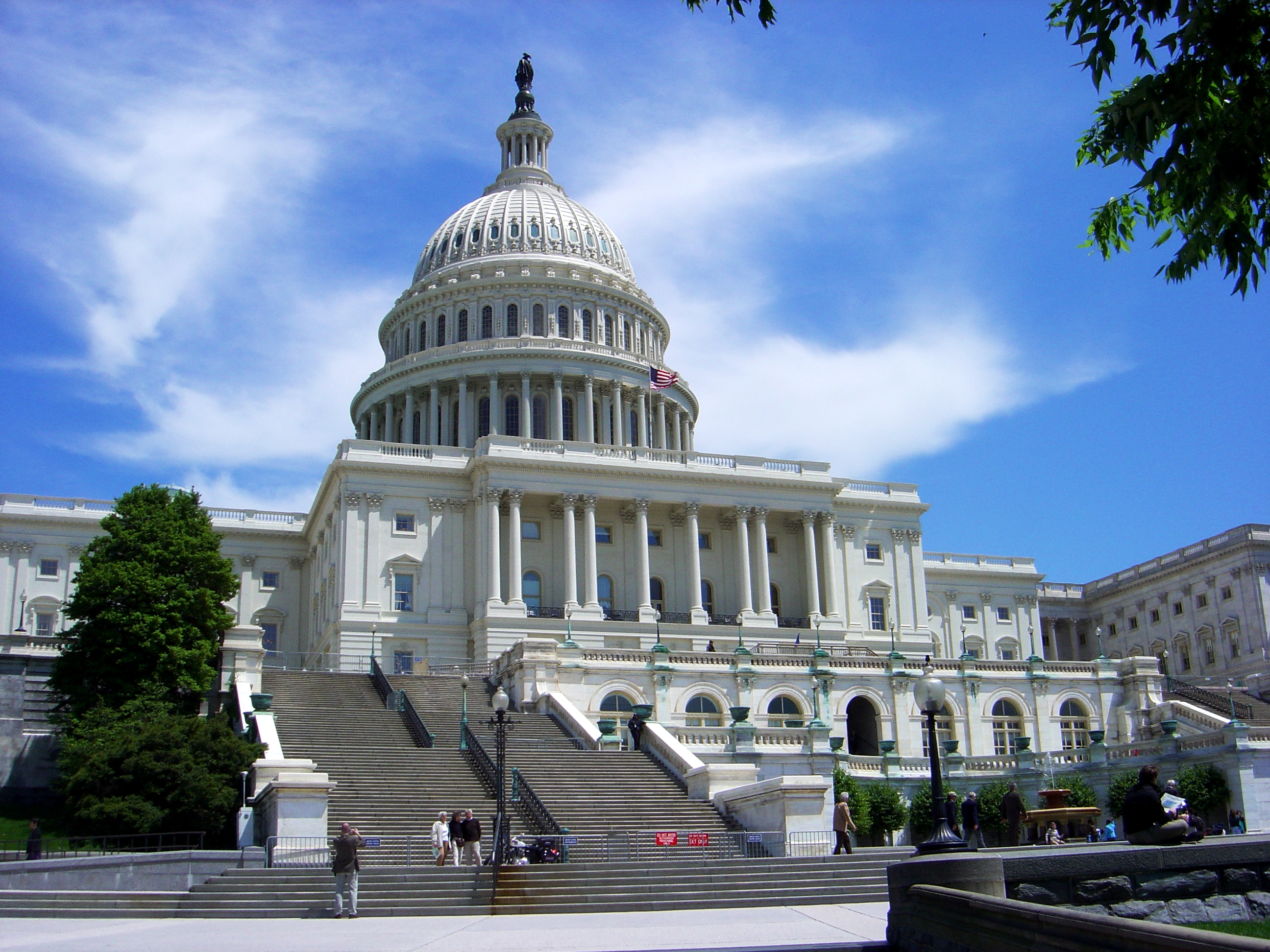
Showing posts with label Congressional Budget Office. Show all posts

CBO: Strong Public Plan Saves $150 Billion

This is some great news from Jonathan Cohn at The New Republic:

According to a pair of Capitol Hill sources, preliminary estimates from the Congressional Budget Office suggest that a strong public option--the kind that the House of Representatives is putting in its reform bill--should net somewhere in the neighborhood of $150 billion in savings over ten years.
I've written previously about how both the Senate HELP Committee bill and the House bill wrote the rules determining the amount of subsidies given to individuals to help them afford insurance was structured so that the Congressional Budget Office would score a strong public plan as saving large amounts of money.

I'm very pleased with these preliminary results from the CBO and they are right in line with my estimates. Last month, I calculated that a strong Medicare buy-in public option would make the HELP bill score between $200-$250 billion cheaper. The House bill has slight less generous subsidies than the previous version of the HELP bill I used to come up with my estimates. I'm also under the impression that the strong public plan scored by the CBO was not paying Medicare rates but Medicare rates plus 5-10%. These two factors should account for most of the difference between my estimate and the preliminary estimate from the CBO.

The only unfortunate piece of news is that my estimate was based on the assumption that the CBO would be unable/unwilling to calculate what effect competition from public option would have on reducing the cost of insurance from private insurance companies. It unfortunately appears that my assumption may have been correct. This mean the CBO is in fact understating the potential savings from a robust public option.

Overall this is all very good news and should greatly increase the chance that health care reform includes a strong public option. It is possible that Peter Orzag and Barack Obama were expecting these results from the CBO this whole time. Their focus on savings may have been part of a trap to trip up the opponents of a robust public plan. Of course, we also need to hope that the CBO doesn't conclude that a strong public plan would end up “dominating” the exchange.

Will The CBO Be Used To Force A Strong Public Plan?


What is overlooked in all the talk about the creation of a public health insurance option is cost. Most of the debate has been centered on governing philosophy. There is reflexive disdain for the government running anything on the right and hatred of for-profit insurance companies on the left. But all this may not matter as much as what the Congressional Budget Office (CBO) has to say on the matter. Having a strong public plan could save the government billions, if not trillions, of dollars.

A Lewin Group study determined that a Medicare buy-in public plan's premiums would be 23% cheaper than private health insurance. That means a family of four would save $2,500 a year if they could sign up for a Medicare-like public plan. It's been reported that Ted Kennedy plans to introduce a strong public plan based on Medicare. It would use the same network and infrastructure but would pay doctors 10% more for services than Medicare. With Kennedy's payment change, the savings for a family of four would be slightly less but still substantial.

I reason to suspect that Ted Kennedy plans to use the CBO to make the case for a strong public plan. His health care reform bill will have some sliding scale of subsidies and/or tax rebates to help people buy insurance based on their income. If he is smart, he will tie the level of subsidies to the cheapest qualified plan (one that must meets all coverage critical), which would inevitably be the public plan.

For example, if the cost of the cheapest plan exceeds 10% of your after-tax income, the government will pay for the difference. (If the cheapest qualified plan cost $5,000, and your after tax income is $30,000, you get $2,000 to help buy health insurance). By tying subsidies to the cost of individuals' health insurance, it means offering a low cost public plan would make the whole health care reform legislation cheaper.

I think Ted Kennedy will have the CBO score his health care bill with his strong public plan and without it. If he uses a subsidy mechanism like the one I laid out, the plan with his public option should cost billions less a year. Using some back of an envelope calculations, I beleive having a public health insurance option would reduce the cost by roughly $20 billion in the first year, with even greater savings in subsequent years.

The divide in cost between private insurance and a public plan is expect to only grow in the coming years. According to a study by The Institute for America's Future, from 1985-2002 premiums for the Federal Employees Health Benefits Program (a model for a regulated health exchange without a public option) grow annually by 7.3%. During the same time period, Medicare (a model for a Kennedy's public insurance option) grow annually by only 5.8%.

LinkWithin

Related Posts Plugin for WordPress, Blogger...