Showing posts with label Barack Obama. Show all posts

Baucus Keeps Up His End Of Secret PhRMA Deal

Last month Ryan Grim at Huffington Post uncovered an internal memo outlining at the secret deal made between Baucus, the White House, and PhRMA. According to Grim,
Representatives from both the White House and PhRMA, shown the outline, adamantly denied that it reflected reality. PhRMA senior vice president Ken Johnson said that the outline "is simply not accurate." "This memo isn't accurate and does not reflect the agreement with the drug companies," said White House spokesman Reid Cherlin.
After complete my preliminary reading of the Chairman's Mark of Baucus' bill it appears that Baucus has followed the deal outlined in the memo quite faithfully. Baucus bill would increase the Medicaid rebates from 15.1% to 23.1% (page 53). It would provide Medicare part D patients in the donut hole a 50% discount of brand name prescription drugs (page 122).

In accord with the internal memo, Baucus bill does nothing to change current law regarding drug re-importation from cheaper countries. It does not contain the Medicaid/Medicare dual eligibility rebate promoted by Henry Waxman. It does not allow Medicare to directly negotiate drug prices which was added to House Energy and Commerce committee bill. There also appears to be no change to Medicare Part B in reference to pharmaceuticals.

Baucus bill differs from the memo in only two points. There does not appear to be any change to current law regarding follow on biologics, FOBs. The Baucus bill also imposes an annual fee of $2.3 billion on the entire drug sector ($23 billion total) which is more than what the memo says (page 214). If you do combine the $12 billion agreed to fee with the $9 billion agreed to savings from FOBs (which appear not to be in the bill) it is a total of $21 billion. Overall it appears that the internal memo uncovered by Grim very accurately reflects a secret deal Baucus and Obama cut with PhRMA.

Obama Stops Democrats From Committing Political Suicide

The lack of the public option, insufficient subsidies, a disastrous “free rider” provision, a large individual mandate, junk insurance options, etc... These are all very bad ideas in Baucus' framework. But the single most politically disastrous part of Baucus' plan is the timeline.

According to Baucus' framework basically nothing happens until 2013 at the earliest. All the consumer protections (ending pre-existing conditions, community ratings, ending rescission) do not fully kick in for everyone until 2022. That is right, 2022. According to the draft, the new consumer protections start for the individual market in 2013. They are not mandated in the small group market (companies with 1-50 employees) until 2018 and not mandated for the larger group market (51-100 employees) until 2022.

Under Baucus' bill going into both the 2010 election and the 2012 election millions of Americans would still be uninsured, pre-existing conditions would still be used by insurance companies to screw Americans. The Democrats would face two elections without a single thing to show for their health care reform efforts. That is pure political suicide.

In the speech Obama promised two very important things last night. He promised that most of the important consumer protections would go into effect quickly: “As soon as I sign this bill, it will be against the law for insurance companies to drop your coverage when you get sick or water it down when you need it the most.”

He also promised some form of catastrophic insurance until the real reform starts in 2013: “In the meantime, for those Americans who can't get insurance today because they have preexisting medical conditions, we will immediately offer low-cost coverage that will protect you against financial ruin if you become seriously ill.”

This will give Democrats at least something tangible to show voters between now and 2013. I still think it is a very bad idea to delay many of the important reforms for so many years, but at least there will be some noticeable improvements to brag about in the mean time.

Obama Calls His Own Website A Liar

The problem is President Obama and Obama's website have two radically different messages on the public option.

Yesterday Obama told the American people during a radio interview:
"We are willing to make compromises," Obama told his radio audience. But he said he is not willing to give up on "core principles."

Obama tried to clear up what he described as confusion surrounding his health-care proposal. He described the public option -- a government-run provider -- as only a small, and optional, part of his overall initiative.

"What we've said is, we think that's a good idea," Obama said of publicly funded health insurance. "We haven't said that's the only aspect."
The only problem is that the public option is (or at least was) a “principle” of health care reform. On his DNC website, Obama is still asking people to “stand with the president” by taking the following pledge:
The Principles

President Obama has announced three bedrock requirements for real health insurance reform:
-Reduce Costs — Rising health care costs are crushing the budgets of governments, businesses, individuals and families and they must be brought under control
-Guarantee Choice — Every American must have the freedom to choose their plan and doctor – including the choice of a public insurance option*
-Ensure Quality Care for All — All Americans must have quality and affordable health care
Now we have to show Congress where the American people stand.

This lack of consistence makes it very hard for anyone to trust Obama. If he said honestly that he might need to sacrifice one of his core principles, like the public option, to insure that other important reforms to our health care system get passed that would be a message the progressive base might understand. (They would not be happy but they might at least understand.) Remember it is not just the "left of the left" demanding a public option. It was Obama who told his supporters to demand the public option as a "bedrock requirment" for reform.

Pretending that the public option was never a core principle when you have it still list on your own website as one of the three “Principles” and a “bedrock requirement” makes you look like a lying scumbag. (I foolishly thought that "bedrock requirements" were the same thing as "core princples.") Progressive now have no reason to trust Obama and have no idea what else could be cut from a final bill. If Obama is willing to change what is his “core principles” on a daily basis, everything is on the table.

Obama's supporters don't need "to show Congress where the American people stand." President Obama needs to show the Congress and the American people where he stands.

*Highlighting was mine

Was Grassley's "Death Panel" Talk Obama's Wake Up Call?

Obama has long tried, and so far failed, to reach a bipartisan agreement on health care reform. He has given incredible leeway to Max Baucus to come to some kind of agreement with Chuck Grassley. Obama has been very malleable, willing to concede on several important issues to gain some Republican support.

Until this last week, the concessions demanded by Grassley at least seemed to have an ideological basis. They seemed to be on issues where there was a real philosophical difference on the role of government. The issue of the government run public option, the issue of an employer mandate, the size of subsidies, what new taxes should pay for reform, etc...

But everything changed on Wednesday when Grassley told people to be afraid the Democrats had a secret plan to kill grandmothers. He was attacking a small end-of-life counseling provision which Sarah Palin dubbed “death panels.” Until last week, end of life counseling has never been a partisan or ideological idea. It has been long championed by dozens of Republicans over the years.

Grassley was not fighting against an idea for ideological reasons. He decided to shamelessly fear monger about what should have been a completely noncontroversial proposal. I think Grassley showed that day that he is not and has never been an honest broker during the health care negotiations.

Yesterday at a town hall, Obama made a statement which seemed to be directed squarely at Senator Grassley. Obama said,
So when I have people who just a couple of years ago thought this was a good idea now getting on television suggesting that it’s a plot against grandma or to sneak euthanasia into our health care system, that feels dishonest to me.
To my knowledge this is the first time Obama has criticized one of the Republicans who are part of Baucus' “Gang of Six.” This could be the wake up call Obama needed. Proof that Grassley was not delaying reform for ideological reason but to simply hurt Democrats.

PS, it appears that Grassley knows Obama was directly going after him.

Media Shocked That Progressives Are Not Helping Obama, After He Says He Plans To Betray Them

Talking Points Memo wonders why the blue team is not showing up to support Obama's health care reform efforts. The Plum Line is shocked that Obama's campaign email list is not able to turn out large numbers of volunteers at the town hall meetings. Marc Ambinder at The Atlantic can't understand why liberal groups are unable to match the anti-reform protesters.

Let's make this clear: Progressive health care activists hate insurance companies. They know (normally from personal experience) that what the insurance companies do is evil. They make money by taking people's premiums and then later refusing to pay for their treatments. You do not become a liberal health care reform volunteer because you are worried about the long term growth rate of health care cost and its eventual effect on budget deficits. Their single biggest goal is freedom from the insurance companies.

Obama knows that the number one goal of liberal health advocates is single payer, with a robust public plan being an acceptable compromise to most. Obama has repeatedly said that he will not fight for the public option he promised. Obama would prefer “bipartisan reform” to good reform. He is letting ultra-conservative Mike Enzi write health care reform. He is giving the wishes of the 5th most conservative senator more weight than the promises he made to his base.

No one should be surprised that liberals are not spending their weekends to show support for health care reform that Mike Enzi is writing. Obama has repeatedly said he will sell out the goals health care reform advocates to win over a handful of Republican senators. There is nothing shocking about the fact that progressives don't feel like helping Obama when he is actively advertising his willingness to betray them. He as already sold them out to PhRMA on the cheap.

Why Obama Now Needs The Public Plan

There was a time only a few months ago when it looked like health care reform could actually be easy. Obama's approval rating was sky high. Baucus and Kennedy had gotten all the different industries to the table. A small but noticeable number of Republican senators claimed to be open to reform. Everyone thought the reform train was rolling out, so no one wanted to be left at the station.

Not so long after those first heady months, everything started to unravel. Obama's approval rating started dropping. The Republican meme that killing reform would kill Obama slowly became party doctrine. Baucus and Grassley failed time after time to make their own deadlines. And probably most devastating, the CBO score came back, and it was bad.

It seemed at first there was hope reform could be a big win-win. Doctors gave a little, Phrma gave a little, insurance companies gave a little and there would be enough to pay to get everyone insured. It seems they were hoping several relatively painless changes like more preventative care, payment structure changes, competitive bidding, electronic records, etc. would have their powers combine into huge savings.

If that first CBO report of health care reform came back at only $500 billion it might all have worked. The medical industries would accept some reforms in exchange for a massive new customer base. Liberals would be forced to give up on the public option in exchange for extremely generous subsidies to the poor and middle class. The bill could have been paid for all through savings or only minor, indirect taxes. A decent bipartisan reform bill would have been quickly passed over some progressive objections.

When CBO director Elmendorf refused to score most of the potential savings the grand coalition fell apart. The knives came out and someone (if not everyone) was going to be the loser. What industries would take a huge hit to their profits? Would liberals be forced to accept very small subsides and getting everyone only bad technical insurance? Would Republicans swallow large tax increases?

When reform went from deal making to knife fighting, Obama lost all hope of easy bipartisan reform. His only hope is to rally his base for an arm twisting partisan bill. The only thing which can rally the base is the public option.

The health care activists tend to be the people who were screwed over by insurance companies or had loved ones that were. They aren't going to waste their weekends knocking on doors campaigning to give insurance companies huge checks from the government. They don't want to see the industry be forced to accept some sensible new regulations. They want to be free of them. They want to see these evil companies dismantled.

Some in the media wonder why Obama's progressive volunteers are not turning out in force for health care reform. The answer is simple. He has made it clear he is not committed to their main goal: freedom from the evil insurance companies.

Progressive activists will not rally around slogans like:

“Several new common sense regulations that end some of health insurance's worst practices in exchange for forcing everyone by law to pay thousands for their product.” or “Demand subsidy levels be 9% instead of 11% of income for families making over 300% of the FPL.”

If Obama wants to get the grassroots fighting with him for health care reform he needs to make a firm promise that he is not going to sell them out. Every time he makes a wishy washy statement about the public option, says everything must be on the table, and claims private cooperatives might be just as good, it is a blow to the grassroots' moral. It is Obama telling them he does not need them, does not want them, and will not stand with them.

If Obama wants to rally an army of activists to his cause all he needs to do is publicly say, “I will veto any bill without a real public option.”

Is It The Blue Dogs Or Obama To Blame On Health Care?

I do feel that some of the blue dogs are way out of touch with their constituents and way too in touch with health insurance lobbyists. But in defense of the blue dogs, I think many just want to know that they are not going to get stabbed in the back.

No member of the Democratic caucus should be forced to make a tough vote if there is no chance that the bill will become law. No one knows what Obama is thinking or what he is planning. If he is going to completely scrap the House bill in conference and back Baucus' bill, why should the blue dogs vote for the House bill?

It is one thing to stand with your president; it is another thing to stand out on a cliff without him. Obama's refusal to draw lines, make demands, or commit to proposals is leaving everyone guessing.

Obama's willingness to give Senator Baucus complete leeway does (and should) make blue dogs nervous. Is Obama humoring Baucus, just desperate to pass anything, or planning to make a hybrid in conference?

It is easy to blame the blue dogs for not standing with the party, but they can't really be blamed if Obama is unwilling to provide them with leadership or cover.

Who Is Keeping The CBO's Public Plan Estimates Secret? - Updated

The House's bill contains a public option that would pay a Medicare rates plus 5%. According to the CBO this will make the House's public plan roughly 10% cheaper than private insurance. Since the size of subsidies are based on the average of the three cheapest plans it should dramatically reduce the cost of the bill.

Over a week ago Jonathan Cohn at New Republic was leaked a report that the House's public plan would reduce the cost of the bill by roughly $150 billion. The official bill has been out for days and the CBO must have evaluated the potential savings from the public plan. Yet no estimates have been released. Someone is purposely hiding the cost savings from the public plan.

Why would anyone keep the cost savings from the House's public option secret?


One likely possibility is that they are preparing to substantially change the public option to gain the support of more conservative Democrats. Ryan Grim reported that some blue dogs were working to replace the House's public plan with the Senate HELP committee's. The CBO projects that the HELP public plan would not be substantially cheaper and would not dramatically effect the overall cost of reform. This is because the HELP public plan does not base its payment rates on Medicare.

The Democratic party leadership may not want it to be publicly know just how much a strong public option would reduce the cost of reform, if they were preparing to compromise on it. If Progressive activists saw the CBO report about the strong public option, they may have vigorously fought a $150 billion sacrifice to gain the support of a few dozen blue dogs. There might be fear that the inter party battle could derail reform.

The only other possibility I can imagine is that Obama does not want estimates about a robust public option released until after the CBO calculated the effect of the new “MedPac on steroids” proposal. The new stronger MedPac should dramatically reduce the cost of Medicare and therefore also reduce the cost of a public option based on Medicare's payment rates. There might be a desire not to attach a number to savings from a strong public option until it is the greatest possible savings.

Either way someone is purposely keeping the CBO's estimates about the House's public option secret.

Updated: The members of the Congressional Progressive Caucus just sent a letter to Nancy Pelosi in which they claim that, "allowing providers to opt out of the public option has already created a loss of $91 billion in savings." This is clear proof that there is a CBO estimate about the savings from the strong public option which has not been released.

Obama Refuses to Take His Own Health Care Pledge

Organize for America is President Obama's political organization. He has asked his supporters to take the OFA pledge to “stand with the president” on his push for health care reform. The pledge states that health care reform must:
•Reduce costs — Rising health care costs are crushing the budgets of governments, businesses, individuals, and families, and they must be brought under control
•Guarantee choice — Every American must have the freedom to choose their plan and doctor – including the choice of a public insurance option
•Ensure quality care for all — All Americans must have quality and affordable health care
The problem is that Obama refuses to stand by his own pledge. He and his advisors have repeatedly said that they support a public insurance option, but not that it must be part of health care reform. They will not draw a line in the sand and even say there are willing to forfeit the public option completely or accept private, non-profit co-ops instead.

Why should anyone pledge to “stand with the president” on his core principles of health care reform if he is unwilling to? It doesn't matter that I demand a public insurance option be part of reform if the president doesn't make the same demand. Barack Obama can get a public insurance option passed if he is willing to use reconciliation; instead, his advisors say he is willing to give up on the “core principle” to get the vote of a few Republicans.

Mr. President, if you are willing to forfeit the public option for political expediency it is not a “core principle”. It is a sign you have no principles.


*'including the choice of a public insurance option' was highlighted for emphasis

Bipartisan Health Care Reform Nearly Dead?

During the Sunday talk shows the most important line came from White House advisor David Axelrod. His statements indicate the chance of bipartisan health care reform is becoming increasingly remote.

On This Week, David Axelrod redefined bipartisanship as simply including Republican ideas in the bill. He only “hopes it will come with Republican votes.”

This is new willingness on the part of the White House to go it alone on health care reform. I suspect what happened is the White House saw just how watered down legislation would need to be to get Republicans' support and was very not happy.

I looked at a draft outline of the “bipartisan” Senate Finance Committee's bill, and it is terrible. All the recent reporting has indicated that it has only gotten worse.

I don't know if the Obama administration concluded that the Finance Committee's bill would be unworkable politically, practically, or both. On a political level, there are probably enough liberal members of the House and Senate who will kill any reform resembling the Finance Committee's bill. They would rather take the “swiss cheese” version of a good bill that would be the result of using reconciliation over the complete version of a bad “bipartisan” bill.

The White House may also be concerned that the Finance Committee's bill would on a practical level be unworkable. It would be implemented too slowly, not do enough to make health care affordable, and not slow the growth in cost. If Obama signs a health care “reform” bill that could still leave low income people with medical bills in the ten of thousands, it could discredit the reform, the president, and the party.

No one yet knows what final shape the bipartisan Finance Committee's health care bill will take, but it is not going to be pretty. Obama has said he would rather have 85% of what he wants with 70 votes than 100% with 52 votes. The problem is any bill that can get 70 votes in the Senate will probably be closer to 35% of what he wants. Obama needs to ask himself if that is good enough for him personally, and also if he will be able to sell it to the more progressive members of his party. Axelrod is indicating the answer might be no.

What Obama's Health Care Letter Really Says


Barack Obama sent a letter to Senator Kennedy and Senator Baucus providing some details about how he wants health care reform to be structured. I will go through the letter line by line to tell you want he is really saying.

Cost:

“At this historic juncture, we share the goal of quality, affordable health care for all Americans. But I want to stress that reform cannot mean focusing on expanded coverage alone. Indeed, without a serious, sustained effort to reduce the growth rate of health care costs, affordable health care coverage will remain out of reach”

This line is pretty straight forward. Health care reform must primarily reduce cost for most Americans to get a majority of the country on board. He says “reduce the growth rate” -- not bring down the cost. Some argue that America dramatically overpays for health care, and we should be able to actually reduce cost and not just slow its increase. He is saying health care reform must be real but not a truly dramatic overhaul. Also implied is that the metric to judge reform will be cost and not coverage. Like in Massachusetts, coverage will not be truly universal; a small percentage of people will be left out for now (mainly a few hard-to-reach individuals and illegal immigrants).

Health Insurance Exchange:

“The plans you are discussing embody my core belief that Americans should have a choices for health insurance, building on the principles that if they like the coverage they have now, they can keep it. But for those who don't have such options, I agree that we should create a health insurance exchange – a market where Americans can one-stop shop for a health care plan, compare benefits and prices, and choose the plan that's best for them, in the same way the Members of Congress and their families can.”

Health insurance exchanges have wide bipartisan support from basically everyone, including Obama. There are two other subtle points here. First he uses the phrase “don't have such options,” which implies he is willing to not make it easy for people who currently have employer health insurance to opt out of it. The exchange might be only for those currently without insurance from an employer. If you want to opt out of your employer's health plan, you may not get any help from your employer or the government in buying your own insurance plan.

There might also be a “don't reinvent the wheel” message here. There is no need to write news rules governing a health insurance exchange. Just use the same rules for the current federal employee health exchange or one of the state employee exchanges.

Public Option:

“I strongly believe that Americans should have a choice of a public health insurance option operating alongside private plans. This gives them a better range of choices, make the health care market more competitive, and keep insurance companies honest.”

This is good but not great news for progressives who support a public plan. “Strongly believe” and “should” is relatively week language. He could have said, “...(must and/or need) to have a choice of a public health insurance option” He could have also said “I will not accept reform without a public plan”.

He wants a public option available now (not a trigger that might put a plan in place depending on future events), but there is still some wiggle room. “Should” still leaves him room to break his campaign promise about a public health insurance option. It is a statement which sets the public option in quickly drying concrete but not in stone. He does not give any indication about how he wants the public option to be structured. I believe that the fix is in for Senators Schumer's compromise public plan.

Mandates:

“I am open to your ideas on shared responsibility. But I believe if we are going to make people responsible for owning health insurance, we must make health care affordable. If we do end up with a system where people are responsible for their own insurance, we need to provided a hardship waiver to exempt Americans who cannot afford it. In addition, while I believe that employers have a responsibility to support health insurance for their employees, small businesses face a number of special challenges in affording health benefits and should be exempted.”

On employer mandates, it is clear that big companies will be required to provide health insurance, small businesses will not.

On an individual mandate, despite campaigning against it, Obama is prepared to accept it now. A “hardship waiver” for Americans “who cannot afford it” is a nice piece of legal-ese to give Obama an out. The message is that he wants any subsidy to help people buy health insurance to be based on their ability to afford it. This will allow him to have a “hardship waiver” that is meaningless. For example, the waiver could allow people to not buy insurance if it cost more than 15% of their income, but the bill could fully subsidize the cost of insurance when it is goes over 10% of their income.

Savings:

“I am also open to your ideas about giving special consideration to the recommendations of the Medicare Payment Advisory Commission (MedPAC), a commission created by a Republica Congress. Under this approach, MedPAC's recommendations on cost reductions would be adopted unless opposed by a joint resolution of the Congress.”

Ezra Klein explains how important this is for reducing the cost of health care and as entitlement reform. The message is that the structure of Medicare health care payments are too important, too wonky, and too open to special interest lobbying; Congress can't be trusted to be involved in the nitty-gritty of it any longer.

Bipartisanship:

“I know that you have reached out to Republican colleagues, as I have, and that you have worked hard to reach a bipartisan consensus about many of these issues. I remain hopeful that many Republicans will join us in enacting this historic legislation that will lower health care costs for families, businesses, and governments, and improve the lives of millions of Americans.”

These lines should be the most encouraging to progressives. Bipartisanship is nice but not at the cost of completely watering down reform. He does not need Republicans to join the Democrats; he is only “hopeful” that they will. There is also an implied threat. Republicans may claim that they will vote against the Democrats' health care bill, but when it comes time to publicly denying millions of Americans health insurance, they will think twice. Those who vote against health care reform will be hammered on their vote in the next election.

The More AHIP Concedes, The More Proof A Public Plan Is Needed


Ever since Barack Obama took office, the America's Health Insurance Plans have been steadily conceding ground in hopes of killing off a public health insurance option. For years the cost of health insurance has been growing dramatically, the number of uninsured has skyrocketed, and out-of-pocket costs are going ever upwards. While all this has been happening, the private health insurance companies have done nothing to slow the explosion in cost. They did not put forward a serious plan to address the number of uninsured. And they refused to stop cherry picking customers, overcharging women, and fighting claims.

All this changed when it appeared that they might face real competition from a public plan. They first promised to accept all comers. Then they promised to stop charging sick people more. Recently, they promised to stop charging women more than men. And today, they promised to slow the increase in cost by introducing reforms that should have happened years ago.

As long as the health insurance companies fear facing real competition, they will continue to concede. That is how competition works: it forces companies to cut costs and/or increase the quality of their product. Once the public health insurance plan is officially killed, they will stop conceding. Companies only change when they know not changing will hurt their bottom line.

The public plan is already working and is needed so it can continue to improve health care for everyone. If there is no public option, the health insurance companies will soon return to their old tricks. They are still claiming that they should be able to set rates based on “geography.” Being able to charge people more based on “geography” will allow health insurance companies to redline low income, African-American, and/or Hispanic neighborhoods.

This needs to be clear: The only reason the health insurance companies are playing nice is because they fear real competition for the first time. They will only play nice as long as they face real competition from a public health insurance option. If there is no public plan, in the long run, there will be no meaningful reform.

Barack Obama Whitewashes Support for the Public Insurance Plan


There are many ominous signs that indicate the Obama administration will not even try to include the public plan option in this year's health care reform. During the campaign, Barack Obama promised that his health care plan would include a public plan option in his health care reform, but it looks like the plan may die without a fight.

The Obama administration's websites have essential no indications that he supports a public plan option. Not only is the public plan not mentioned on Whitehouse.gov, but there is only a few indirect reference to it on his website dedicated to health care reform, healthreform.gov. Neither site states Obama supports a public plan.

The most recent indication that Obama is planning to abandon one of his core campaign promises came today with the launch of “Doctors for America” (DrsforAmerica.org). Senator Baucus and the Center for America Progress Action Fund today announced the rebranding of the campaign organization “Doctors for Obama” (DoctorsForObama.org) as “Doctors for America”.

Doctors For Obama was an organization which promoted Obama's health care plan and his candidacy. It previously actively endorsed the public plan on its website. In its newest incarnation DrsforAmerica.org the phrase “public plan” does not appear once.

Almost all Republicans, a few Democrats, and the whole health insurance industry is opposed to the public plan option. On the other hand, the public plan option is one of the core issues for the progressive movement and is supported by the vast majority of Americans in most polling. Many Democrats believe a public plan option is the cornerstone of reform and the only way to dramatically reduce the cost of health care while expanding coverage. Barack Obama could never have won the Democratic presidential primary without fully backing a public plan option.

It would be highly disappointing, but understandable, if the public plan had to be sacrificed as literally the only way to implement important health care reforms. What is happening, though, is completely different. Not only is the Obama administration not openly fighting for the public plan, it appears that they are also trying to whitewash history and pretend that he never supported it in the first place. If this critical campaign promise dies a quiet death behind closed doors, it will be a very worrying sign about the type of president Obama will be.

Reconciliation: The Tipping Point On Health Care Reform


What is probably the decisive battle in the war to reform our health insurance system is currently being fought behind closed doors. It is not a battle over regulation, the public plan, or funding. It is the fight to include in the budget a provision to pass health care reform using reconciliation if a bipartisan bill fails. Reconciliation would allow health care reform to pass with a simple filibuster-proof majority.

Currently (without reconciliation) the Senate Republicans have an enormous influence over health care reform. If they can keep all 41 GOP senators together, they can filibuster any health care bill. Barack Obama has made health care reform his first of several major initiatives he wants to tackle. If health care reform fails, it would mean Obama is a weak and ineffective president. It would destroy his political capital and cripple all his other reform plans.

Obama needs to pass health care, and the Republicans know it. They know walking away from a bipartisan bill could hurt Obama more than themselves. Without reconciliation they could force any health care bill dramatically to the right despite their small numbers.

Including a health care reconciliation provision completely alters the political dynamics. With reconciliation the Democrats don't need any Republican support to pass health care reform. Without reconciliation, if the Republican senators walked away from a bill it would kill it. Now if Republicans refuse to compromise on health reform, it will end up being written by the left wing of the Democratic Party.

Reconciliation is the key to passing progressive health care reform. It is the massive stick which forces Republicans to make large compromises or live with a bill written entirely by Democrats. By including reconciliation and maintaining enough unity, the Democrats will be able to pass any health care reform they want.

Dear Krauthammer: I Think the Car Warranties Would Be the Least Shocking Thing for Madison


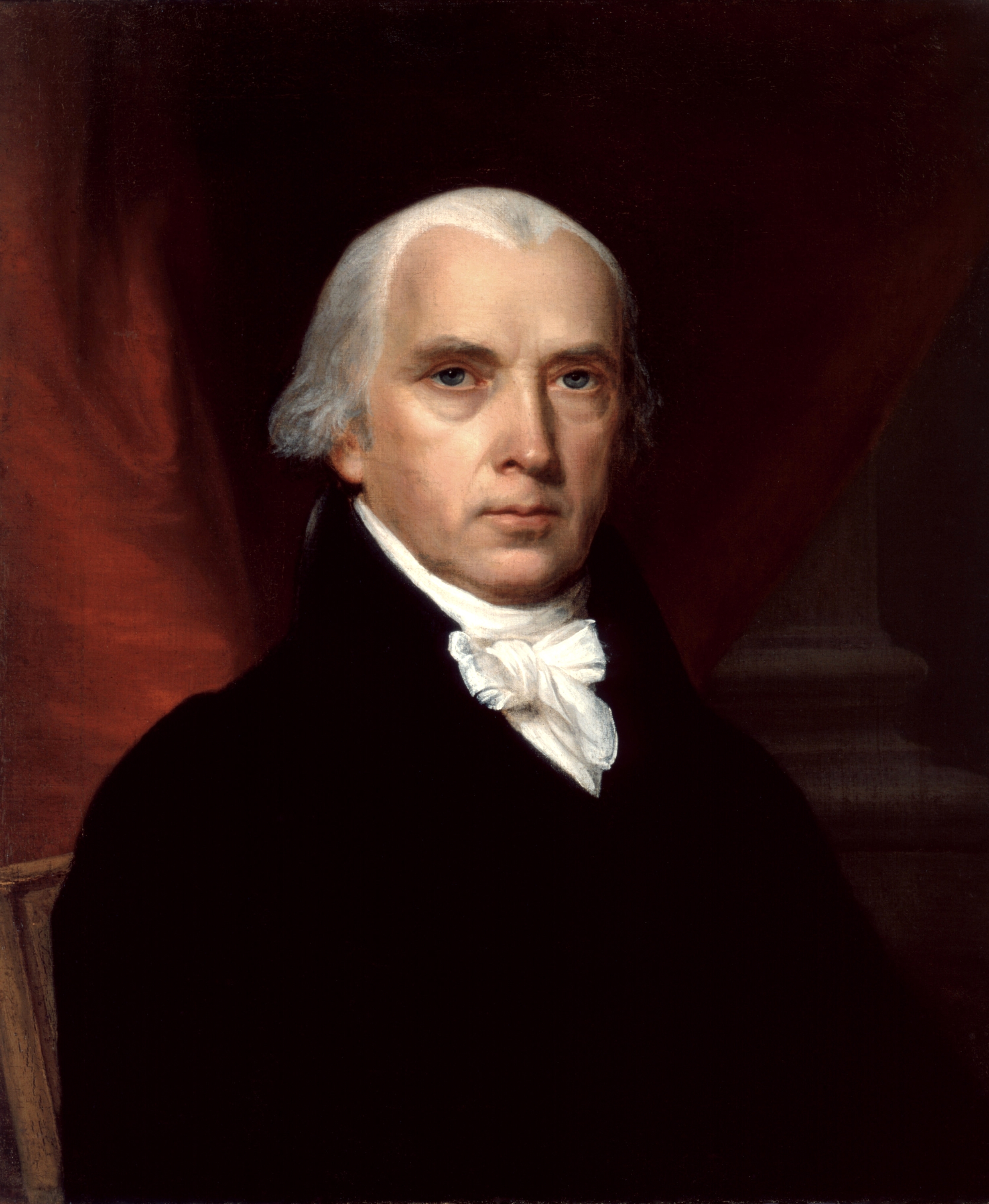
Charles Krauthammer wrote that he believes after explaining to James Madison what a car is, he would be shocked how the Constitution would allow Obama to unilaterally decide to guarantee car warranties. Really, Mr. Krauthammer? You think of everything that the Constitution has allowed to happen in the past 100 years, it would be the car warranty incident which James Madison would notice?

I think he would probably be more shocked to learn that the Constitution allowed a negro to be president, a woman to be speaker of the house, and a heretic to become senate majority leader. He would be disappointed to discover that the senate rule of unlimited debate has become some twisted tool to force all bills to pass by a 3/5 supermajority. He would be amazed that the Constitution protected the right of “coloreds” to marry whites and made being gay legal. He would be unable to believe that the Constitution now protects the right of people to make hardcore-tranny-bondage-orgy porn. The fact that only 4% of people are farmers would completely freak him out.

He would be shocked that there is a federal income tax and even more perplexed that we have signed treaties stopping us from using tariffs. I can't even imagine how he would feel about how the government has spent billions to make cannabis illegal, given that he wrote the Constitution on hemp paper and George Washington grew it. I don't think he would be happy that while fighting two overseas wars, we decided to cut taxes. Nor do I think he would like it that we have 1% of all Americans locked up in prison. Having the most expensive standing army on earth would probably scare him.

I love our Constitution and our founding fathers. I think George Washington will go down as the most morally important man in history, and I think our founding fathers were the among the most enlightened men of their time. But they were still men of their time. The Constitution is not and never was prefect. It protected slavery and allowed denying women the right to vote. It is just foolish to complain about current policy positions because you think an 18th century plantation owner who wrote a constitution for a small agrarian society would be against it.

Obama's Car Plan Will Devastate the Poor

Barack Obama proposed a plan to provide large credits to people who trade in old cars to buy new ones. While the plan will increase new cars sales (at a large cost to the American tax payer) it would be destructive to low income Americans.

Many Americans rely on used cars as their source for transportation. By provide a generous credit for trading in old cars the government will create a price floor for used cars. The result will be that millions of used cars will dramatically increase in value pricing out low income Americans. Many poor people will be unable to afford a car. The result could be devastating to individuals that need cheap cars live and work.

The Un-Obama Health Care Bill


Barack Obama's goal is to pass a massive health care reform bill this year. If he succeeds at achieving this long sought -after Democratic goal, it will become the foundation for his legacy. It may be the single most important achievement that he is remembered for. Ironically, the health care bill he will likely sign will be very different than the health reform plan he campaigned on.

Barack Obama decided to use a hands-off approach in pursuing health care reform. He gave Congress a very basic set of principles and told them to write the bill. This approach has two major advantages. First, it does not repeat the mistakes of the Clinton health care reform effort. Second, it allows Obama to support a bill that may likely break several of his campaign promises.

There appears to be a growing consensus about two issues in health care reform. It seems there is an agreement on all sides that in exchange for mandating all individuals acquire health care, health insurance companies will not be allowed to turn down applicants and must cover pre-existing conditions. The issue of a mandate was the key difference between Barack Obama's and Hillary Clinton's health care plans during the primary. Obama campaigned on not forcing people to acquire health insurance, but the plan he eventually signs will likely contain just that.

Obama originally proposed to pay for health care reform by reducing the rate of deduction for high income individuals. This idea appears dead on arrival. While the consensus is not yet as strong as the consensus for the mandate, indications are that health care reform will be paid for by changing the law governing taxation on employee health insurance. This was an issue in the general election. John McCain supported taxing employee health insurance, and Obama attacked him for it. Like with mandates, here is another issue which Obama campaigned against but will possibly be part of the eventual bill.

The biggest fight over health care reform will probably center on whether to give people the choice of buying a public plan similar to Medicare. Barack Obama, Senator Baucus, and most Democrats have supported offering a public plan. The for-profit insurance companies along with several powerful Republican senators are dead set against it. It was part of Obama's campaign plan and part of a white paper published by Baucus just after the election. Interestingly, the idea for a public plan can't be found on WhiteHouse.gov, HealthReform.gov, or Baucus' senate website. The public plan may eventually be dropped to get a bill passed with broad bipartisan support. If so, the “Obama health care reform bill” that is passed this year will be a very Un-Obama plan.

Health Care Reform in May?

I have reverse-engineered what is possibly the Obama administration's timetable for passing massive health care reform. By piecing together dozens of interviews, news reports, and knowledge about Congress, I've been able to construct what I believe to be Obama's overall strategy. Using all available information, I believe Obama plans to sign a health care bill in late May or early June of 2009.

Step 1. Lay out the budget with $634 billion for health care.

Step 2. Announce both a HHS secretary and a health care czar as a clear indication that Obama is planning to move full-speed ahead. They will now have all the important players in place for the first health care summit on Thursday.

Step 3. Have a group of senators lay out a detailed outline of the bill at the health care summit Thursday. Senator Baucus released a white paper on health care reform right after the election and has been working on it since. Senator Kennedy has also been having secret, closed-door meetings on health care for months now. The optics here are very important. It will be members of Congress and not the Obama team which presents the detailed outline. This way, they can avoid one of the biggest complaints against Clinton's health care plan.

Step 4. Use the detailed outline on health care reform to test the water for support. This will result in one of two possible paths to passing the legislation.

Step 5. Writing and Passing the bill.

A) The bipartisan route: If a substantial number of Republican senators (5 to 11) show support for the bill, they will move quickly to negotiate and write the legislation throughout March. With Republican support, a bipartisan bill should be finished sometime in May. Voting and reconciliation will take a week or two, and the bill will arrive on Obama's desk at the end of May or early June.

B) The partisan route: If Republican senators appear initially united against the outline of the health care reform proposal, the Democrats will choose to play hardball. If there is not strong bipartisan support at the start, it will mean that the Republicans have decided to sink health care to sink Obama. It will be a clear sign they do not plan to negotiate in good faith. The Democrats will use the budget reconciliation rule to pass health care with only 51 votes. They may make it a stand-alone bill or more likely embed it in the new budget (which is also on schedule to be passed in May).

Wall Street No Longer Believes in Capitalism


It is amazing to see that Wall Street is so willing to throw ideals of capitalism under the bus. We are being told that the problem with the current financial sector is that there is about a $1-3 trillion worth of "toxic assets" on their books. But "toxic assets" is only a fancy propaganda way of saying bad investments. The toxic assets are simply assets that the banks paid too much money for and now can't sell for a good price.

The foundation of capitalism was summed up by Adam Smith as "Everything is worth what its purchasers will pay for it". Yet America is being told to now ignore that principal. The market is willing to purchase these "toxic assets" at about 25 cents on the dollar. By definition that is their true value. The banks don't want to sell their "toxic assets," not because they honestly think they are worth more than 25 cents on the dollar because if they did, they would be forced to acknowledge that they are bankrupt.

The banks want us to ignore the principles of capitalism now that they are no longer working to their advantage. Their hope is that the government will allow itself to be ripped off by purchasing the "toxic assets" for more than they are worth (by the definition of free market economics: what the market is willing to pay for them). Or by insuring a pricing floor individuals willing to purchase the "toxic assets." People who buy the "toxic assets" would make a profit if the assets gained value, and the government would pay them if they lost value. This would only perpetuate the tails-you-win, heads-we-lose mentality which ruined the market.

The simple problem with the major banks is that they are already bankrupt, but neither the banks, Wall Street, Barack Obama, or Tim Geithner want to admit it. Any plan put forward to deal with the "toxic assets" without taking over the banks involves the American tax payers absorbing their trillions of dollars in losses for them. There is no such thing as a "toxic asset," only a bad investment. The banks made plenty on them, and now they want the government to buy them at twice their real value.

Phelps, Clinton, Bush, Obama


What do these four men have in common? They are all very successful, and they all used illegal drugs while in their twenties. We now have our third straight president with past drug use. If they had been arrested, their criminal records could have prevented them from civil service work. However, drug use did not prevent them from becoming the head of that same government that would have incarcerated them.


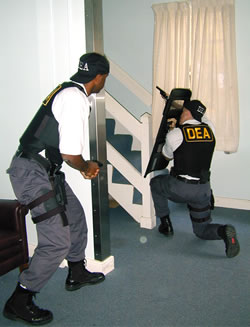
Even though we have been led for 17 years by former drug users, there has been unfortunately little change to our insane drug laws. Hopefully, this country will use our current economic crisis to reevaluate our war on drugs. While many Democrats are still focused on the cost of the war in Iraq, they seem to ignore the far more expensive war at home. The cost of DEA agents, SWAT teams, millions of prisoners, lost wages, and international eradication programs easily dwarfs the cost of the trillion dollar economic stimulus package.

LinkWithin

Related Posts Plugin for WordPress, Blogger...