An excise tax on high-end health insurance benefits is an extremely regressive tax on the middle class. Even though Ezra Klein claims this tax is progressive, it is not. It would raise relatively little money from the wealthy.
It is true that the bottom 30% is unlikely to pay very much of the new excise tax, but ,by the same token, the top 0.1% will pay almost none of it either. As Klein admits, the very most expensive insurance plans for CEOs are worth maybe $40,000. While that is a lot, it is only three times as much as an average family insurance plan's $13,375. On the other hand, a CEO's financial compensation could easily be more than 50 times as much as an average family's salary.
According to the Kaiser Family Foundation, very few plans (roughly 2-4%) are currently over the $21,000 for family (and $8,000 for individual) threshold, but premiums are increasing at around $800 a year and the threshold for the cap is only pegged to the consumer price index. In the first few years, the tax on benefits would hit only a few families, but by 2019 it would affect around 40% of insurance plans that would otherwise have been offered.
Teachers, policemen, firemen, coal miners, union members all tend have very generous health insurance. For the top 0.1% of income earners (people making over $2,000,000 a year) in this country, health insurance benefits are a tiny percentage of overall compensation. For many middle class families, health insurance benefits are a significant portion of total compensation. Placing an excise tax on health insurance worth over $21,000 will hit the middle class much harder.
For example in 2019, let's assume a CEO makes $3 million a year and has a family health insurance plan worth $43,000. Whether or not he pays the excise tax or has the money converted to income, he is paying taxes on an extra $22,000. That is only a 0.7% increase in the amount of taxable earnings for the CEO.
On the other hand, picture a coal miner, policeman, or fireman making $65,000 a year with a family health insurance plan worth $27,000. He will be paying taxes on an additional $6,000 of his earnings. For the middle class family, that is a whopping 9% increase in the amount of their earnings which is now taxable.
In 2019 the tax on benefits should generate--at most-- two to three percent of its revenue from the richest 0.1% of households. By contrast in 2007, 12.3% of the nation's income went to the 0.1% richest people in the country. Relative to their income, the tax on benefits would generate very little from the richest Americans. A flat, across-the-board, 1% tax on all earnings would generate a dramatically greater proportion of its revenue from the richest Americans than this new excise tax on health insurance benefits.
Some people argue that ending the tax-exempt status of health insurance is a good policy necessary to reduce the growth in health care spending. (I personally dispute that this is a major factor in cost, and think the basis for the claim is shaky at best.) But by no standard can I accept calling a tax progressive when it disproportionately favors millionaires over middle class Americans.
Showing posts with label ezra klein. Show all posts
Showing posts with label ezra klein. Show all posts


Wyden's Free Choice Proposal + Strong Public Plan = Half Trillion In Savings For Businesses
Senator Wyden's new “Free Choice Proposal” has recently gotten some positive attention (Ezra Klein, Jonathan Cohn). His idea is interesting but politically very problematic. There are also several important policy issues that would need to be worked out.
Basically, it would destroy the employer provide insurance system. Technically it would allow all employers to continue to provide health insurance or they could give their employees a voucher equal to at minimum “70% of the lowest cost Exchange plan.” Employees would use these vouchers to select any plan they wanted to on the Exchange. I'm sure a few companies might continue to provide insurance, but the vast majority would switch to providing vouchers. Wyden's plan would be politically problematic, because it would result in millions losing their current coverage.
Interestingly, he links the size of vouchers to the lowest cost plan on the Exchange. A new Medicare-like public plan would almost always be the lowest cost plan. The more robust the public plan, the cheaper the lowest cost plan will be.
Wyden's Free Choice Proposal would give businesses a huge incentive to fight for including the strongest possible public plan. If all businesses choose to provide a minimum voucher instead of insurance, simply including a strong public plan as part of reform should save them around $500 billion over a ten year window.
Basically, it would destroy the employer provide insurance system. Technically it would allow all employers to continue to provide health insurance or they could give their employees a voucher equal to at minimum “70% of the lowest cost Exchange plan.” Employees would use these vouchers to select any plan they wanted to on the Exchange. I'm sure a few companies might continue to provide insurance, but the vast majority would switch to providing vouchers. Wyden's plan would be politically problematic, because it would result in millions losing their current coverage.
Interestingly, he links the size of vouchers to the lowest cost plan on the Exchange. A new Medicare-like public plan would almost always be the lowest cost plan. The more robust the public plan, the cheaper the lowest cost plan will be.
Wyden's Free Choice Proposal would give businesses a huge incentive to fight for including the strongest possible public plan. If all businesses choose to provide a minimum voucher instead of insurance, simply including a strong public plan as part of reform should save them around $500 billion over a ten year window.
Public Plan Is The Canary In The Coal Mine
The public plan has been called a political “litmus test”, but in reality it is much closer to a canary in the proverbial coal mine. Several progressive (Ezra Klein, Matthew Yglesias, John Cohn) writers have published articles stating that while the public plan is important, it is not indispensable to real health care reform.
First, I will concede that it is technically possible to create a good health care system, that would be acceptable to progressives, without creating an open public option or single payer. The Netherlands and Switzerland are examples of good, highly regulated market-based systems. (More about that below)
The problem is, I see no reason to believe that there is any Republicans would support the heavy handed regulations needed if there is not a public option. I think Republicans and the health insurance industry would fight equally as hard (or harder) to kill these strong regulations as they are fighting to kill the public option. The public plan is more important than just offering a government insurance option. It is the first battle between policy experts promoting reform and industry lobbyist protecting profits. If lobbyists are able to kill the incredibly popular public option, it shows they have the power to dictate the shape of health care reform.
If strong grassroots support can't protect the public plan, I don't know how it will save dozens of smaller wonky regulations. The choice will never be between a public plan and a well structured highly regulated market. It is between real reform and fake reform. If the reformist can't win on the issue of a public plan they have almost no hope winning the battle for tough regulation.
Even if they did manage to create a highly regulated health care system without a public plan, I don't see how it would be nearly as stable. Public programs like Medicare, Medicaid, the Post Office, Social Security, etc. are politically very sticky. Eliminating them would be a huge political lift. On the other hand, removing regulations is easy. Regulations can be weakened or removed one at a time until the whole regulation safety net is unraveled.
Netherlands
To make a “market based system” work in the Netherlands and Switzerland requires a huge amount of heavy handed government regulation. In the Netherlands private insurance only covers relatively healthy people. The most expensive patients that need long term care are covered by a mandatory state run insurance plan. Private insurance companies must offer a well defined set of benefits and must do so at a fixed price for all. It is illegal to charge anyone a different price for any reason. This includes co-pays, deductibles, exclusions, and any other possible trick. They do allow they say of supplemental insurance that covers the few things not part of the basic benefits package.
They use a form of strong risk equalization. The government pools a large fraction of premiums and distributes the money as it sees fit to insurance companies to discourage cherry picking only health customers. There are powerful competition regulators that check for abuse, monopolies, cartels, and acts against customer interest.
Switzerland
Switzerland uses a similar system. In Switzerland people choose from highly regulated private insurance companies. Premiums are based on a strong community rating system with only minor variations based on only sex and age. All private insurance companies must offer at least the same government-defined basic benefits. All benefit plans most be open to all comers. Most importantly, it is illegal for insurance companies to make a profit on the basic benefits package. They may only make money on supplemental insurance that covers things like dentistry or private hospital rooms. It should also be noted that Switzerland has one of the most expensive health care systems. (that should make it a poor choice as a model for reform.)
I just can't see Republicans or the health insurance industry agreeing to this level of regulation. Is there any reason to believe insurance companies would be more willing to accept a law making it illegal to make a profit on basic health insurance plans than a public option?
The public plan is about more than just providing a public insurance option. It is smart policy, would reduce the cost of reform, and is incredibly popular. If the public plan is not included, it means this “reform” effort put the interest of big business and politicians over that of the public. If the battle over the public option is lost, the people advocating real health care reform in the public interest are in serious retreat. Like a canary in a coal mine, if the public plan is dead it means all the oxygen is quickly being sucked out of quality reform.
First, I will concede that it is technically possible to create a good health care system, that would be acceptable to progressives, without creating an open public option or single payer. The Netherlands and Switzerland are examples of good, highly regulated market-based systems. (More about that below)
The problem is, I see no reason to believe that there is any Republicans would support the heavy handed regulations needed if there is not a public option. I think Republicans and the health insurance industry would fight equally as hard (or harder) to kill these strong regulations as they are fighting to kill the public option. The public plan is more important than just offering a government insurance option. It is the first battle between policy experts promoting reform and industry lobbyist protecting profits. If lobbyists are able to kill the incredibly popular public option, it shows they have the power to dictate the shape of health care reform.
If strong grassroots support can't protect the public plan, I don't know how it will save dozens of smaller wonky regulations. The choice will never be between a public plan and a well structured highly regulated market. It is between real reform and fake reform. If the reformist can't win on the issue of a public plan they have almost no hope winning the battle for tough regulation.
Even if they did manage to create a highly regulated health care system without a public plan, I don't see how it would be nearly as stable. Public programs like Medicare, Medicaid, the Post Office, Social Security, etc. are politically very sticky. Eliminating them would be a huge political lift. On the other hand, removing regulations is easy. Regulations can be weakened or removed one at a time until the whole regulation safety net is unraveled.
Netherlands
To make a “market based system” work in the Netherlands and Switzerland requires a huge amount of heavy handed government regulation. In the Netherlands private insurance only covers relatively healthy people. The most expensive patients that need long term care are covered by a mandatory state run insurance plan. Private insurance companies must offer a well defined set of benefits and must do so at a fixed price for all. It is illegal to charge anyone a different price for any reason. This includes co-pays, deductibles, exclusions, and any other possible trick. They do allow they say of supplemental insurance that covers the few things not part of the basic benefits package.
They use a form of strong risk equalization. The government pools a large fraction of premiums and distributes the money as it sees fit to insurance companies to discourage cherry picking only health customers. There are powerful competition regulators that check for abuse, monopolies, cartels, and acts against customer interest.
Switzerland
Switzerland uses a similar system. In Switzerland people choose from highly regulated private insurance companies. Premiums are based on a strong community rating system with only minor variations based on only sex and age. All private insurance companies must offer at least the same government-defined basic benefits. All benefit plans most be open to all comers. Most importantly, it is illegal for insurance companies to make a profit on the basic benefits package. They may only make money on supplemental insurance that covers things like dentistry or private hospital rooms. It should also be noted that Switzerland has one of the most expensive health care systems. (that should make it a poor choice as a model for reform.)
I just can't see Republicans or the health insurance industry agreeing to this level of regulation. Is there any reason to believe insurance companies would be more willing to accept a law making it illegal to make a profit on basic health insurance plans than a public option?
The public plan is about more than just providing a public insurance option. It is smart policy, would reduce the cost of reform, and is incredibly popular. If the public plan is not included, it means this “reform” effort put the interest of big business and politicians over that of the public. If the battle over the public option is lost, the people advocating real health care reform in the public interest are in serious retreat. Like a canary in a coal mine, if the public plan is dead it means all the oxygen is quickly being sucked out of quality reform.
Sanders' Slowdown For The Public Plan
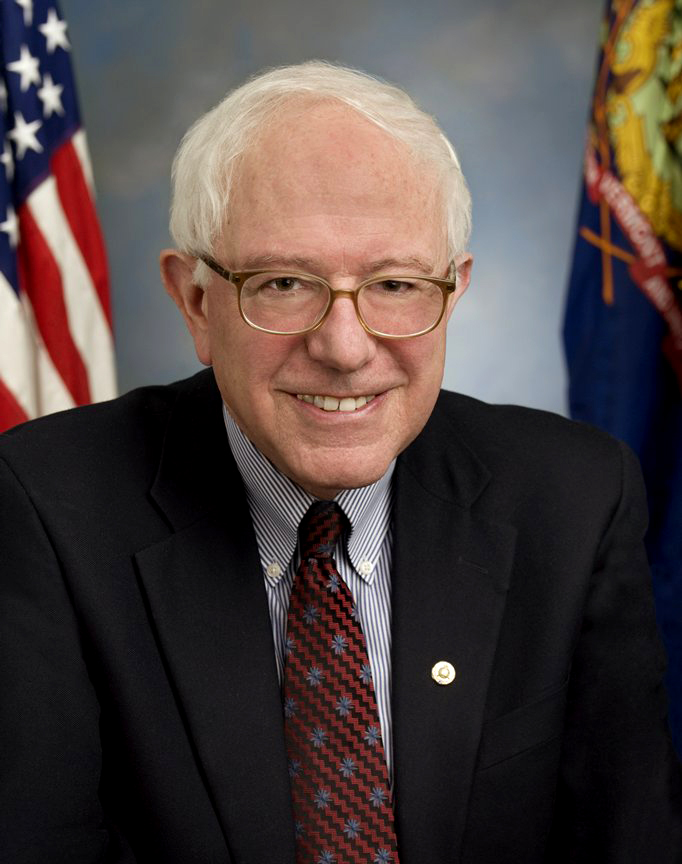 Independent Senator Bernie Sanders has been making a splash on progressive blogs with his very public advocacy for including a strong public plan in health care reform. Sen. Sanders told Ezra Klein that he was going to “try and form a Coalition of the Unwilling. People prepared to stay strong for a strong public option.”
David Waldman at Congressmatters.com doesn't think Sen. Sanders will go so far as to actually filibuster a health care bill if it doesn't include a public option. But thanks to the reconciliation measure adopted as part of this years budget, Sanders' “Coalition of the Unwilling” doesn't need to. If there is no bill by October 15th health care reform must go through reconciliation.
former Senate majority leader Tom Daschle believes that a health care reform bill that goes through reconciliation will probably contain a “pure public option.”
Bernie Sanders' coalition doesn't need to filibuster health care reform without a public plan. They don't even need to vote against any bill without a public option. All they need to do is slow down the whole process. (a process which is already very much behind schedule) There are only 12 legislative weeks left before reconciliation is triggered. By dragging their feet and delaying the bill until October the "Coalition of the Unwilling" wins.
“Private” Health Insurance Co-ops Are Not A “Public” Option
Dear Wall Street Journal, New York Times, Minneapolis Star Tribune, and the Rest of the Mainstream Media,
A privately-run cooperative is in no way, shape, or form a public option. By definition, a “privately” run entity is not “public”. It is not a public plan compromise. It is not a watered-down form of a public option. It bares no resemblance to a public plan. It would lack the benefits of a public plan and would do nothing to reduce cost.
Senator Conrad admits the privately-run cooperatives already exist. There is nothing legally stopping someone from creating health insurance cooperatives right now. This "compromise" is the status quo. Senator Conrad's plan is simply a complete and total defeat for supporters of the public option. It is ethnically irresponsible to report it as anything else.
A privately-run cooperative is in no way, shape, or form a public option. By definition, a “privately” run entity is not “public”. It is not a public plan compromise. It is not a watered-down form of a public option. It bares no resemblance to a public plan. It would lack the benefits of a public plan and would do nothing to reduce cost.
Senator Conrad admits the privately-run cooperatives already exist. There is nothing legally stopping someone from creating health insurance cooperatives right now. This "compromise" is the status quo. Senator Conrad's plan is simply a complete and total defeat for supporters of the public option. It is ethnically irresponsible to report it as anything else.
What Obama's Health Care Letter Really Says
Barack Obama sent a letter to Senator Kennedy and Senator Baucus providing some details about how he wants health care reform to be structured. I will go through the letter line by line to tell you want he is really saying.
Cost:
“At this historic juncture, we share the goal of quality, affordable health care for all Americans. But I want to stress that reform cannot mean focusing on expanded coverage alone. Indeed, without a serious, sustained effort to reduce the growth rate of health care costs, affordable health care coverage will remain out of reach”
This line is pretty straight forward. Health care reform must primarily reduce cost for most Americans to get a majority of the country on board. He says “reduce the growth rate” -- not bring down the cost. Some argue that America dramatically overpays for health care, and we should be able to actually reduce cost and not just slow its increase. He is saying health care reform must be real but not a truly dramatic overhaul. Also implied is that the metric to judge reform will be cost and not coverage. Like in Massachusetts, coverage will not be truly universal; a small percentage of people will be left out for now (mainly a few hard-to-reach individuals and illegal immigrants).
Health Insurance Exchange:
“The plans you are discussing embody my core belief that Americans should have a choices for health insurance, building on the principles that if they like the coverage they have now, they can keep it. But for those who don't have such options, I agree that we should create a health insurance exchange – a market where Americans can one-stop shop for a health care plan, compare benefits and prices, and choose the plan that's best for them, in the same way the Members of Congress and their families can.”
Health insurance exchanges have wide bipartisan support from basically everyone, including Obama. There are two other subtle points here. First he uses the phrase “don't have such options,” which implies he is willing to not make it easy for people who currently have employer health insurance to opt out of it. The exchange might be only for those currently without insurance from an employer. If you want to opt out of your employer's health plan, you may not get any help from your employer or the government in buying your own insurance plan.
There might also be a “don't reinvent the wheel” message here. There is no need to write news rules governing a health insurance exchange. Just use the same rules for the current federal employee health exchange or one of the state employee exchanges.
Public Option:
“I strongly believe that Americans should have a choice of a public health insurance option operating alongside private plans. This gives them a better range of choices, make the health care market more competitive, and keep insurance companies honest.”
This is good but not great news for progressives who support a public plan. “Strongly believe” and “should” is relatively week language. He could have said, “...(must and/or need) to have a choice of a public health insurance option” He could have also said “I will not accept reform without a public plan”.
He wants a public option available now (not a trigger that might put a plan in place depending on future events), but there is still some wiggle room. “Should” still leaves him room to break his campaign promise about a public health insurance option. It is a statement which sets the public option in quickly drying concrete but not in stone. He does not give any indication about how he wants the public option to be structured. I believe that the fix is in for Senators Schumer's compromise public plan.
Mandates:
“I am open to your ideas on shared responsibility. But I believe if we are going to make people responsible for owning health insurance, we must make health care affordable. If we do end up with a system where people are responsible for their own insurance, we need to provided a hardship waiver to exempt Americans who cannot afford it. In addition, while I believe that employers have a responsibility to support health insurance for their employees, small businesses face a number of special challenges in affording health benefits and should be exempted.”
On employer mandates, it is clear that big companies will be required to provide health insurance, small businesses will not.
On an individual mandate, despite campaigning against it, Obama is prepared to accept it now. A “hardship waiver” for Americans “who cannot afford it” is a nice piece of legal-ese to give Obama an out. The message is that he wants any subsidy to help people buy health insurance to be based on their ability to afford it. This will allow him to have a “hardship waiver” that is meaningless. For example, the waiver could allow people to not buy insurance if it cost more than 15% of their income, but the bill could fully subsidize the cost of insurance when it is goes over 10% of their income.
Savings:
“I am also open to your ideas about giving special consideration to the recommendations of the Medicare Payment Advisory Commission (MedPAC), a commission created by a Republica Congress. Under this approach, MedPAC's recommendations on cost reductions would be adopted unless opposed by a joint resolution of the Congress.”
Ezra Klein explains how important this is for reducing the cost of health care and as entitlement reform. The message is that the structure of Medicare health care payments are too important, too wonky, and too open to special interest lobbying; Congress can't be trusted to be involved in the nitty-gritty of it any longer.
Bipartisanship:
“I know that you have reached out to Republican colleagues, as I have, and that you have worked hard to reach a bipartisan consensus about many of these issues. I remain hopeful that many Republicans will join us in enacting this historic legislation that will lower health care costs for families, businesses, and governments, and improve the lives of millions of Americans.”
These lines should be the most encouraging to progressives. Bipartisanship is nice but not at the cost of completely watering down reform. He does not need Republicans to join the Democrats; he is only “hopeful” that they will. There is also an implied threat. Republicans may claim that they will vote against the Democrats' health care bill, but when it comes time to publicly denying millions of Americans health insurance, they will think twice. Those who vote against health care reform will be hammered on their vote in the next election.
Subscribe to:
Posts (Atom)
LinkWithin
