Showing posts with label Banks. Show all posts

Would Nationalize By Any Other Name Not Sound So Scary?


Never have I seen an idea move so quickly from the fringe to the mainstream. While three months ago only a few people were even discussing the possibility of nationalizing some of the failed banks, it is now getting serious coverage. Some Republican lawmakers and publications like the Economist and Newsweek have started to openly talk about the possibility.

The fact that at least a few of the worst banks will be nationalized now seems inevitable. Already some banks have received more TARP money than they are now worth. President Obama has even acknowledged that Sweden's nationalization of their banks in the 90's is so far the best model for how to deal with the problem.

It seems that the greatest obstacle to nationalizing the banks is the term nationalization. For decades, the right has turned both socialism and nationalization into four letter words in American politics. This means that Obama's most important objective in dealing with bank crisis is to invent a new name for nationalization. Below is a list of my favorites. Do not be surprised to see one of these names (or something similar) picked up by the White House in the coming weeks:

Structured Bankruptcy
Managed Bankruptcy
Managed Restructuring
Receivership
FDIC Takeover
Temporary FDIC Directorship
Temporary FDIC Management
FDIC Directed Reorganization
FDIC Restructuring
Reorganization
Managed Reorganization
Forced Reorganization
Managed Liquidation
Directed Management Reorganization

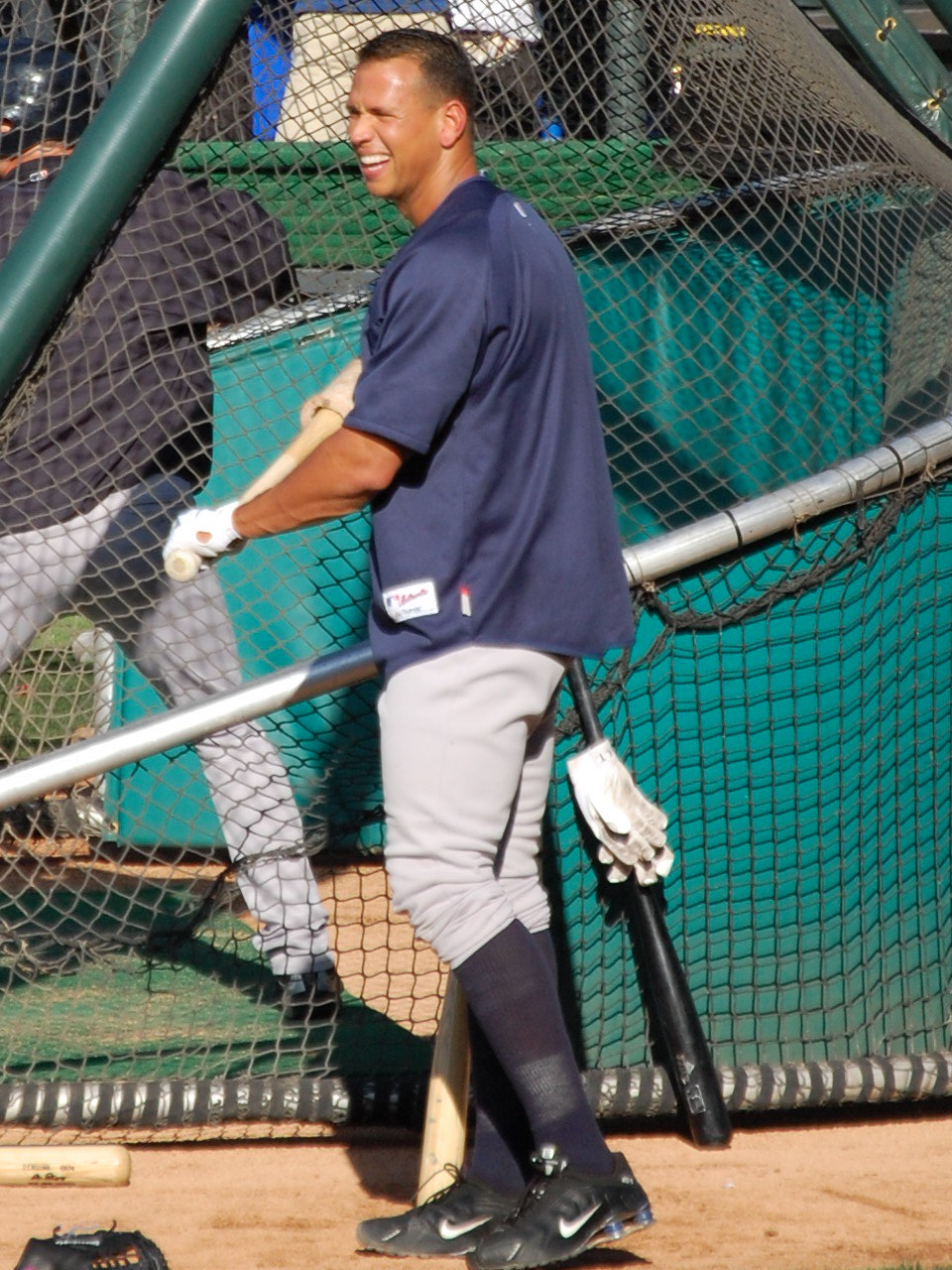
A-ROD and the Banks


During the 90's, performance enhancing drug use was rampant in Major League Baseball. With the revelation that A-ROD used performance enhancers, it appears that almost every important player was cheating. There are two main reasons for why performance enhancing drugs were so prevalent in baseball: A lack of oversight and a lack of moral hazard. Both are problems with our current banking system.


For a long time, drug testing was incredibly rare in baseball. The players' union fought random testing for years and only allowed it after the Congress threatened to pass a law mandating it. Although using steroids or other substances was against the rules, there was almost no risk that a player would be caught. Since no one was checking to see if players were cheating, they cheated.


The other major problem was a lack of moral hazard. Even if a player did test positive for the use of a banned substance, the punishment was incredibly minor. A first time offense result only in "treatment". Some argue that the new rules are still too lenient. Even now it takes a minimum of five positive tests for a player to receive a lifetime ban. For many players, using steroids could make the small difference which pays big dividends. A slightly higher batting average or on base percentage could equal millions more. Using a banned substance carried very little risk yet offered huge rewards.


Addressing only one of these problems (oversight or moral hazard) could have prevented the scandal in baseball. A lifetime ban for a first time offender could have easily scared most players even while testing was very rare. On the other hand, random and pervasive testing may also have deterred many players even with the minor penalties. Unfortunately, the game lacked both, and the result was predictable.


We have seen the problem of oversight in baseball play out on the macro level in our financial sector. The government's regulatory agencies and the private market were both asleep on the job. Bernie Madoff perfectly personifies the lack of proper oversight and the incompetence of the SEC. The private market was no better. Banks directly paid credit rating agencies to rate there exotic and mysterious financial products. The result was far too favorable ratings. This would be like mandating drug testing but allowing players to choose when and which laboratory to perform the testing.


We know there was a lack of oversight in the financial system, and now we are seeing the lack of moral hazard. The CEO's and traders who ruined their companies have not been made to pay back their bonuses or their golden parachutes. Many of them still haven't even lost their jobs. The government bailout of the finance sector has used trillions of dollars in taxpayer money to prevent the banks from collapsing and artificially inflate the stock value. The bailout only continues the "heads I win, tails I break even" system of risks and rewards that crippled our economy. Some have claimed that nationalizing the banks, firing the management, and wiping out the shareholders (like the FDIC has done for years to insolvent banks) would destroy trust in the financial system. But the lack of moral hazard has. Until oversight and moral hazard is returned, trust won't.


Nationalize to Save Capitalism


We are experiencing an unprecedented man-made world financial disaster. There is a lot of blame to go around. Congress shouldn't have pushed laws to try and make it easier for the poor to buy homes. The government should have stopped China from manipulating its currency and flooding the world with cheap capital. The average American shouldn't have taken out loans they couldn't afford. But the vast bulk of the blame rests with the big banks and investment institutions. Your average American can't understand the complexities of these new mortgages. The banks should. It is up to banks to determine who to invest loans in. It is this important skill which justifies bankers' huge salaries and bonuses, and they failed completely.


When a business fails completely it needs to go bankrupt. If bad businesses aren't allowed to fail, we cease to be a capitalist country and become a corporate welfare state. Unfortunately, because of FDIC insurance and the need for people to access their accounts, we can't allow the big banks to go bankrupt. This leaves us with the only logical option: nationalize the banks, fire all the managers, and wipe out the shareholders. The goal should be to break up and try to sell off the banks as quickly as possible.


The argument against nationalization is that the government would do a bad job of running a bank. This is correct. I don't think the government could do a good job of run the banks, but I know for a fact the current CEOs have done a spectacularly horrible job of running the banks. They managed to turn trillions of dollars in stock into worthless paper.


The only alternative to nationalization has been to create a government "bad bank". The bad bank would buy up all the worthless assets from the banks at an above market value. It would be like bailing out the auto companies by having the government pay for hundreds of cars at a million dollars each. People who support the bad bank idea claim it was successful during the Savings and Loan crash in the 80's. The problem is that now, 25 years later, the same people want the same massive bailout--just larger. I promise you this: If we buy up the bad assets now, it will only be 15 years before they come back wanting an even bigger bailout.

LinkWithin

Related Posts Plugin for WordPress, Blogger...