Showing posts with label health care. Show all posts

Reconciliation: The Tipping Point On Health Care Reform


What is probably the decisive battle in the war to reform our health insurance system is currently being fought behind closed doors. It is not a battle over regulation, the public plan, or funding. It is the fight to include in the budget a provision to pass health care reform using reconciliation if a bipartisan bill fails. Reconciliation would allow health care reform to pass with a simple filibuster-proof majority.

Currently (without reconciliation) the Senate Republicans have an enormous influence over health care reform. If they can keep all 41 GOP senators together, they can filibuster any health care bill. Barack Obama has made health care reform his first of several major initiatives he wants to tackle. If health care reform fails, it would mean Obama is a weak and ineffective president. It would destroy his political capital and cripple all his other reform plans.

Obama needs to pass health care, and the Republicans know it. They know walking away from a bipartisan bill could hurt Obama more than themselves. Without reconciliation they could force any health care bill dramatically to the right despite their small numbers.

Including a health care reconciliation provision completely alters the political dynamics. With reconciliation the Democrats don't need any Republican support to pass health care reform. Without reconciliation, if the Republican senators walked away from a bill it would kill it. Now if Republicans refuse to compromise on health reform, it will end up being written by the left wing of the Democratic Party.

Reconciliation is the key to passing progressive health care reform. It is the massive stick which forces Republicans to make large compromises or live with a bill written entirely by Democrats. By including reconciliation and maintaining enough unity, the Democrats will be able to pass any health care reform they want.

The Cayman Islands Will Pay for Health Care Reform


It currently appears that the two biggest obstacles in this year's effort to reform health care will be deciding if it will include a public plan option and how to pay for it. Deciding on how to pay for health care reform could easily be the more contentious issue. Finding a consensus on including and/or structuring a public plan has the advantage of being a fairly narrow policy decision. Deciding on how to fund health care reform suffers from an over abundance of choices.

There are nearly limitless combinations of tax increases, dedication changes, program cuts and fees that could be used to pay for health care. The Obama administration originally proposed reducing the tax dedication rate for high income tax payers. Some Senators have floated the idea of capping the tax exemption for health care benefits over a certain level. Others have advocated for creating a federal value-added tax. Any of those three or a combination of the three could work. The problem is that there are too many workable options and no reason for legislatures to form a consensus around anyone of them.

Hopefully, Congress will be able to come up with a good, useful way to properly fund health care reform. There is a definite possibility it will not. If a real source of funding cannot be decided on, I think a likely way to fund the reform on paper would be to go after offshore tax havens.

The IRS estimates offshore bank accounts are used to illegally avoid paying an estimated $100 billion in annual taxes. That is same amount of money that health care reform is estimated to cost. I know that given the economic, political, enforcement, and foreign policy reality, only a fraction of that potential $100 billion in unpaid taxes might ever be collected. The point would not be to actually pay of health care reform but only to be able to claim that they have found a revenue source to pay for it.

Senator Grassley Doesn't Want You To Have Cheap Health Insurance Because It Would Make it Hard to Find Cheap Health Insurance


According to Radio Iowa, Senator Grassley recently addressed his constituents about health care reform. I'm glad to hear him claim that he is committed to getting health care reform passed this year. Yet, I'm very disappointed that he is determined to make millions of Americans continue to pay too much for health insurance.

At a local forum Grassley referenced a new study by the Lewin Group claiming, “It's quite obvious, if you have 119 million people opt out, you aren't going to have affordable coverage for those that are left in a private health care system”. From his statement I can only conclude Grassley trusts the accuracy of the Lewin Group study and therefore is against allowing Americans to save 30% on their health insurance.

The Lewin Group studies what the effect would be of allowing Americans to choose to buy private health insurance or buy a public option which would be modeled on Medicare. The study concluded that the public plan would provide cheap, low hassle, quality health insurance for a fraction of what private insurance costs. The public plan would be roughly 30% cheaper than a comparable private plan. The “problem”, as Grassley sees it, with the public plan is that it would be such a preferable product that millions of Americans and companies would love to voluntarily switch to it. Grassley is against the public plan because he thinks too many people would like it.

Let's make this very clear: Grassley believes that having public plan based on Medicare would allow Americans to choose an insurance option which would reduce their premiums by 30%. He is against the public plan for the reason that most Americans and companies want to save money and no longer be forced to do business with private health insurance companies. So what he was saying was: he against offering Americans guaranteed affordable, effective health insurance because it could possibly make it harder for Americans to get affordable health care from private insurance companies. Grassley must decide if he wants to help the American people save money or help the health insurance industry protect its profits.

Toxic Assets Plan: a Good Buy, or a Good Diversion?

Treasury Secretary Timothy Geithner has just unveiled his new plan for a public-private partnership to buy up “toxic assets”. The government will provide a small amount of upfront money and a price floor guarantee to encourage hedge funds and other investors to buy up troubled assets. While economists debate if Geithner's new plan will work, an equally important debate is whether Obama and Geithner even believe it will work. I call these two possible views of the administration the optimistic and pessimistic strategy.

It is impossible even for economists and industry leaders (let alone pundits) to properly judge the new Geithner plan. Geithner has vastly unequaled access to important data. He has been able to examine the banks' balance sheets, talk with potential buyers, and he knows what government policy changes are likely to be in the future. While his plan may seem misguided now, it may be a very good investment because Geithner knows there will be a new trillion dollar stimulus bill, big change in money supply, or a massive home owner tax cut.

Given what limited information the public has to judge this plan with, it is impossible to know how much stock the Obama administration puts in this plan working.

The administration may take the “optimistic strategy,” anticipating their plan will work. There will need to be some changes around the edges, and it will be months before the economy turns around, but for the most part, the plan is over. There will be no more need to focus so strongly on the banking sector, and Obama will be able to move on to his real agenda.

The “pessimistic strategy” is the idea that the administration expects this current plan to fail partly or fully. In that case, this is only a band aid plan. It serves two main functions. Obama may know that he will need to nationalize some of the big banks and does not have (or want to use) the political capital to do it now. After this plan fails, he will be able to go Congress and the American people claiming that he has literally tried everything else, and temporary receivership is the only option left.

The other purpose of a band aid plan would be to ease the passage of both his budget and health care reform. It may not be coincidence that the new toxic assist plan was unveiled right before the budget comes up for debate. Many fiscal conservatives are freaking out over the size of Obama's $3.6 trillion dollar budget, but $750 billion of that is money set aside for another potential bank bailout. If after unveiling this new plan the administration can claim it will not need all of the extra $750 billion, his budget drops from $3.6 trillion to $2.9 trillion. Overnight without cutting any programs, Obama's budget would become 20% smaller and would complete null and void the CBO deficit projections. The amount that is going to be set aside just for this year for another round of bank bail outs is roughly equal to the amount of new money need for health care reform over the next decade.

Laissez-faire Capitalism Has Failed Us


Laissez-faire capitalism has failed the United States again. It hasn't failed us in the Marxist proletariat revolution sense, but in a narrow, select number of fields. It failed us in the fields of banking, health care, and energy production. It shouldn't surprise anyone that laissez-faire capitalism failed us. It has failed us in the past and will fail us again in the future. Government management has also failed us on an equally substantial level. It's failed at project housing, the war on drugs, the war in Afghanistan, public education, etc... What America needs is an honest debate about how to balance the failings of laissez-faire capitalism and failings of public sector.

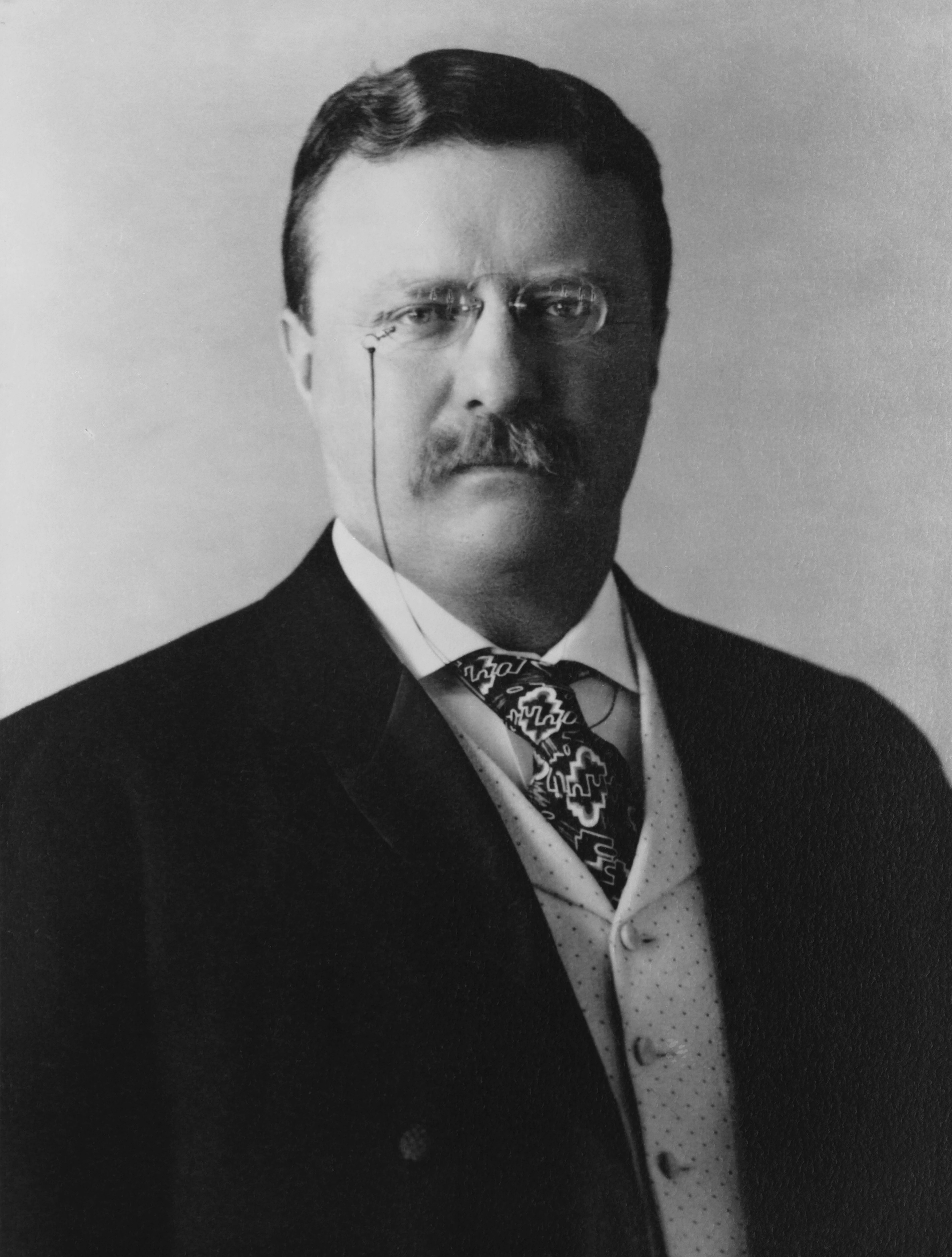
Laissez-faire capitalism has failed us before. Teddy Roosevelt knew this. Before the FDA, medication was the trade of snake oil salesmen and patent medicines. Most “medicines” were either useless, poisonous, or large doses of narcotics. Factory meat packing gave us the world of Sinclair's The Jungle. Without basic environmental laws we had rivers that lit on fire.

Franklin Roosevelt saw what happened to an unregulated banking sector. It is human nature to be swept up in collective hype, put short-term personal gain over long-term institutional stability, and run outright scams. More recently, a large number of economists, experts, and politicians became convinced that we are smarter and more knowledgeable than bankers in the 20's and no longer need New Deal era regulation. Sadly, that knowledge wasn't used to create a self-regulating finance sector, but better ways of creating fake wealth.

Only an ideological fringe with the mentality of an ostrich believes that deregulation of the banking industry was good for America. Even most Republicans acknowledge that we need to re-regulate the finance sector. Laissez-faire capitalism in the banking sector has failed us not once but twice.

In the health insurance industry, laissez-faire capitalism has not failed us as spectacularly, but maybe even more completely than in the banking sector. We pay twice as much per person for health care as the average industrial country, yet as a whole we are dramatically less healthy. Our life expectancy is shorter, our infant morality rate is higher, and the number of uninsured is greater here than in basically every other first world nation combined. Most first wold countries spend about 10% of their GDP on health care while we spend roughly 17%. That is $1 trillion dollars wasted on health care a year. Over a few years, the amount wasted on health care will dwarf even the losses of this recent collapse of the stock market.

From one perspective, laissez-faire capitalism in health insurance has been a big success. The problem is its goals are very different than that of the country's. The nation's goal is to have healthy citizens who aren't bankrupted by health care costs. The goal of the health insurance companies is to make money. They make money by charging large premiums and doing what they can to not pay for health care treatments. We shouldn't be surprised that our health care costs more but treats less.

The failure in the energy sector is simpler. It is widely agreed that producing large quantities CO2 is bad for the world and bad for human society. The cheapest way to produce energy also produces the largest quantities of CO2. The problem is that producing CO2 is free but will eventually cost a large number of people around the world a lot of money. To fix our energy sector we need to determine the real monetary cost of excess CO2. We need to attach a cost to CO2 like attached a cost to SO2.

On the public sector side, the government has failed the country in several spectacular ways. No example is more evident than the failure of our high schools. We have gone from the best public education system to one of the worst among our first world nations. Our drop out rates and test scores are unacceptable.

What America needs is policies based on careful empirical observation and not ideological talking points. Unfortunately, it is always easier to paint the world in broad brush strokes of black and white than to carefully study every issue, evaluating the pluses and minuses of every move.

Almost all Americans are willing to accept the fall of the USSR as proof that communism (complete government control of the economy) was a failure. Yet, there are many Americans who refuse to accept that complete laissez-faire capitalism has been equally debunked by historical evidence. The end of the 19th century was the golden age of laissez-faire capitalism, and it was not good. It was a time of robber barons and oppressive monopolies. There were rivers so polluted they burned, sausage filled with rat meat, and medicines more likely to kill you than cure you. There was actual violent class warfare between labor unions and factory owners. It was a world of unrest and mass popular uprisings.

I'm cautiously optimistic things can change because Barack Obama's top priorities are to reform the financial sector, the health insurance sector, the energy sector, and the educational system-- three areas where poorly regulated capitalism has failed us and one where the government has failed. He campaigned on post-partisanship, but I hope he governs post-ideological. He recently talked about taking politics out of science, but what we need is more science in our politics.
McConnell: A Hypocrite, An Idiot, and A Liar


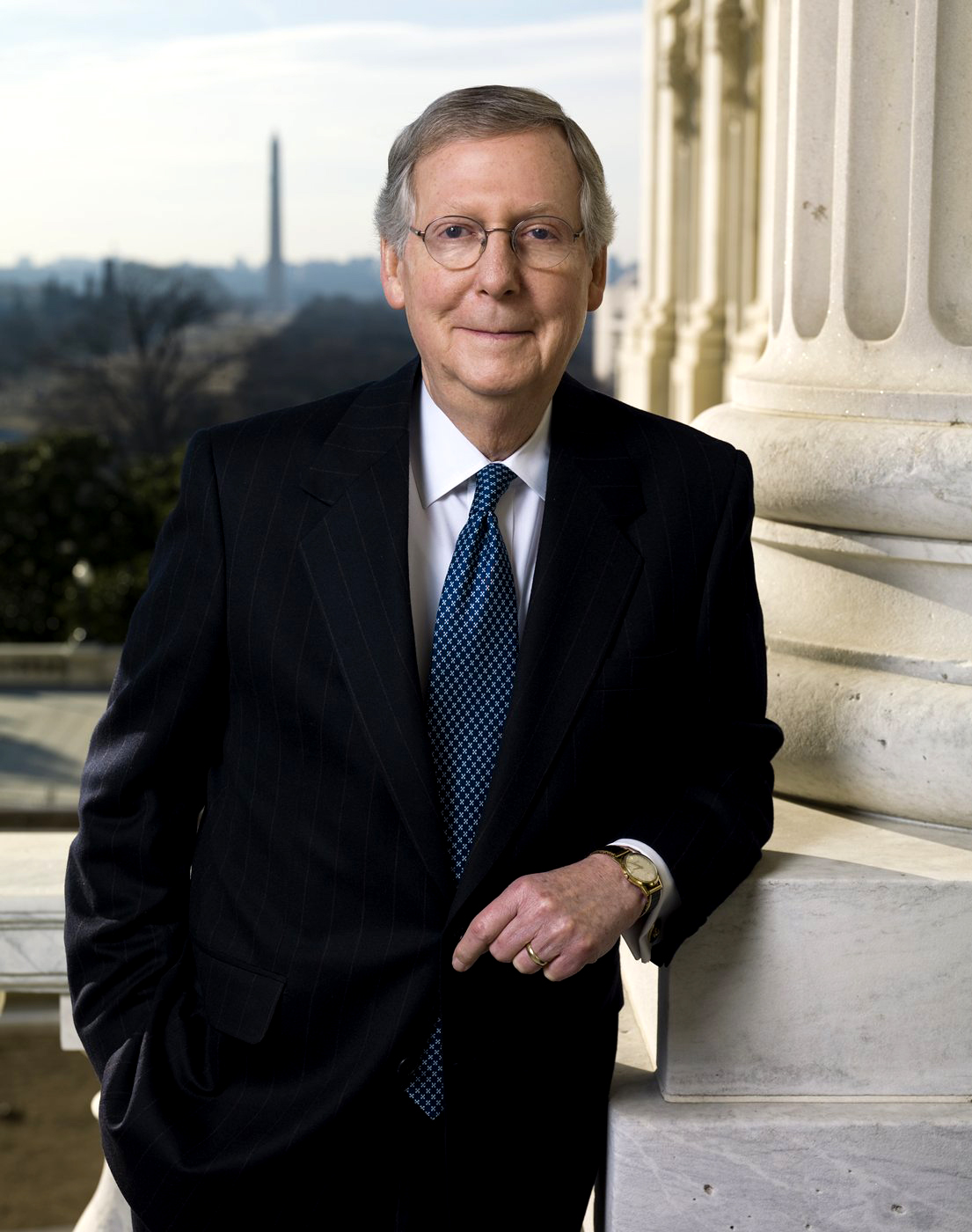
According to the Politico, Senate minority leader Mitch McConnell has sent a letter to Barack Obama about health care. The letter made it clear that he would stand in the way of any attempt to provide individuals with a choice of a government-run or a for-profit, company-run health insurance plan. He claims that if there was a government-run insurance option, it would be much better than every plan from a for-profit company. As a result, so many people would freely choose the government plan there would be no for-profit health insurance companies left.

Mitch McConnell is a member of Congress and as a result receives an amazing government-run health care plan. Mitch McConnell does not want the American people to be able to buy the plan he gives himself. This is the height of hypocrisy. If Mitch McConnell is so concerned about for-profit health insurance companies not being able to attract customers, he should refuse his government-run plan and purchase one on the open market.

Sen. McConnell is an idiot and a liar because he is trying to make two completely contradictory arguments at the same time. It is the belief of the Republican party that we should not have single payer health care (like Canada, France, UK, etc...) because it would result in low quality, long lines, and rationing. Yet at the same time, he is claiming that we must not allow people to freely choose to buy a government-run insurance plan. The reason is that too many people would choose the government-run plan over a for-profit company plan. If government-run health care is so bad, why worry it would out compete for-profit companies?

McConnell claims creating a government option would “take health care decisions out of doctors' and patients' hands and place them in the hands of another Washington bureaucracy.” This is a lie. Already health care decisions are not made between doctors and patients; they are made by insurance underwriters who choose what procedures are and are not covered. The government-run option would be a real choice. I would get to choose if I want a government agency or a for-profit company to make decisions about procedures that should be covered. If for-profit companies are truly better at delivering care, they will have nothing to worry about.

Health Care Reform in May?

I have reverse-engineered what is possibly the Obama administration's timetable for passing massive health care reform. By piecing together dozens of interviews, news reports, and knowledge about Congress, I've been able to construct what I believe to be Obama's overall strategy. Using all available information, I believe Obama plans to sign a health care bill in late May or early June of 2009.

Step 1. Lay out the budget with $634 billion for health care.

Step 2. Announce both a HHS secretary and a health care czar as a clear indication that Obama is planning to move full-speed ahead. They will now have all the important players in place for the first health care summit on Thursday.

Step 3. Have a group of senators lay out a detailed outline of the bill at the health care summit Thursday. Senator Baucus released a white paper on health care reform right after the election and has been working on it since. Senator Kennedy has also been having secret, closed-door meetings on health care for months now. The optics here are very important. It will be members of Congress and not the Obama team which presents the detailed outline. This way, they can avoid one of the biggest complaints against Clinton's health care plan.

Step 4. Use the detailed outline on health care reform to test the water for support. This will result in one of two possible paths to passing the legislation.

Step 5. Writing and Passing the bill.

A) The bipartisan route: If a substantial number of Republican senators (5 to 11) show support for the bill, they will move quickly to negotiate and write the legislation throughout March. With Republican support, a bipartisan bill should be finished sometime in May. Voting and reconciliation will take a week or two, and the bill will arrive on Obama's desk at the end of May or early June.

B) The partisan route: If Republican senators appear initially united against the outline of the health care reform proposal, the Democrats will choose to play hardball. If there is not strong bipartisan support at the start, it will mean that the Republicans have decided to sink health care to sink Obama. It will be a clear sign they do not plan to negotiate in good faith. The Democrats will use the budget reconciliation rule to pass health care with only 51 votes. They may make it a stand-alone bill or more likely embed it in the new budget (which is also on schedule to be passed in May).

Stupid or Playing Dumb?

President Obama's new budget creates a very rough outline of how he plans to make a substantial “down payment” on universal health care. The only details given are that the plan would set aside $634 billion over 10 years for health care reform, and some of that money would come from a change to tax deduction rates for families making over $250,000 a year. Obama's administration is using the estimate that universal health care reform would cost $1 trillion over ten years. (I strongly dispute this often cited figure, but that is a separate article.)

His plan for health care reform in his budget outline appears a first glance, frankly, stupid. Why make a huge “down payment” and just not go for universal reform? Why cover only 36 of the 45 million uninsured? Why link a popular plan to this specific tax increase? The Democrats have the numbers and the momentum to finally achieve a goal they have sought for decades. If they pass the first step now, there is no guarantee they will have the political power to finish the job later. Technically, there is a big difference between $635 billion and $1 trillion, but to the American people, they are both just really big numbers. Not making the health care plan universal will in the long run only make it more expensive.

It is possible that the White House is stupid, but its more likely they are a dozen steps ahead. Obama's budget for health care is probably an elaborate rouse. By giving basically no details about what a plan should look like, he can act like he is blameless while Congress is forced to make the tough choices.

The health care reform bill is probably already written by Senator Baucus and/or Senator Kennedy. While it will be changed around the edges, it is likely Obama already knows its basic shape. The bill will be more expensive than planned and probably contains a mandate even though, during the campaign, Obama laid out a health care plan without a mandate. It is even possible the deduction change to pay for it will drop. He will be able to act like he is being forced to compromise instead of breaking campaign promises he doesn't care to keep.

The Importance of Sebelius


Governor Kathleen Sebelius has been named HHS secretary. Her experience makes her an excellent choice for the position. Yet, the big news is not that Gov. Sebelius has been named to the position, but when. On Thursday, Obama is going to have his first health care reform summit.

Government summits are always more about theater than about discussing issues. Summits can serve two possible PR purposes. The first is to make it look like you are working on a problem without really doing anything. The other is to unveil a new policy and make it appear that all players got to be involved in shaping it. I would be shocked if any real work, consensus building, or compromising happens at any of the many summits Obama calls for.

If the Obama administration had its first health care reform summit without a HHS secretary, it would have been a clear indication that it is of the former type of summit. Obama is currently facing several huge issues, and it would not be unusual if he used “summits” as a way to punt the issue down the road without appearing to break campaign promises.

Gov. Sebelius being named HHS secretary days before the first summit does not automatically mean it will be more than a PR move. But it does dramatically increase the probability that the summit on Thursday will be used to launch a major piece of reform legislation. Senator Kennedy has been having secret closed-door meetings about health care for months. It is possible that this first summit will be where Sen. Kennedy and/or Baucus present a detailed and structured “outline” of what the eventual health care reform bill will look like.

Millions Suffering, Obama Fails to Act

President Obama made many promises during his presidential campaign, but to me there were none more important than his promise to relieve the physical suffering of Americans. On this front, his two biggest promises were to create a universal health care system and to overturn George Bush's misguided executive order restricting stem cell research.

I'm disappointed that Obama has yet to begin addressing our nation's health care crisis. The delay in naming a new HHS Secretary and/or health care czar could set back much needed reforms by months or even years. But I understand that necessary reform will be a serious and time consuming political fight.

What is unconscionable is Obama's failure to fulfill his promise on stem cell research. The Obama campaign promised to immediately overturn Bush's order restricting research. Unlike with legislation, there is nothing preventing Obama from taking action on an executive order. The stem cell research ban could literally be overturned in a matter of hours.

Stem cell research holds the possibility of finding a treatment for Alzheimer's, Parkinson's, diabetes, and a host of physical disabilities. It may eventually improve the lives of millions of Americans who suffer from debilitating illnesses. Some may say that it has "only" been a month and we should be patient. But if it is you, your parents, or your children suffering, a month can be a very long time.

Nancy Pelosi is a Traitor to Progressives

Nancy Pelosi has said that she will likely not be able to pass a universal health bill this year. Her refusal to use this rare moment to move on one of the fundamental promises of the Democratic party is shocking. The Democrats control both houses of Congress by large margins and the White House. Barack Obama campaigned on a promise to provide universal health care. If they were able to find trillions to bailout the banks and a trillion on a questionable stimulus package it is unacceptable to claim there is no longer enough money or political will to pass health care reform.

46 million Americans don't have health insurance, and the number will likely grow by several million in the next year. The Democratic party won this election with the promise of health care and they were delivered the votes to make it happen. If the Democrats are unwilling to move NOW on health care reform, what is the point in ever electing a Democrat?

Half Steps on Health Care are an Insult to America


Part of Barack Obama's huge stimulus package contains money to help states expand Medicaid (a perpetually broken program) and subsidize 65% of COBRA premiums for recently laid off workers. These measures are an insult to Americans in two important ways.


First, it will extend and promote already broken programs. Medicaid is chronically underfunded and does not properly reimburse doctors. As a result, few doctors accept Medicaid and almost always at a loss. Medicaid should use the same reimbursement plan as Medicare. In fact it is a foolish waste of money to administer two health insurance programs which serve the exact same function.


The COBRA is unusable and not surprisingly an underused program. It "allows" laid off employees to keep their health care at a HIGHER price than their employer paid. You may ask: how can a person who just lost their job afford to pay for COBRA? The answer is they can't. Even if the government subsidizes 65% of the cost of COBRA, the price normally runs $1,000 a month for a family. A parent without income is unlikely to be able to afford even the subsidized $350 a month premium.


More importantly, what the United States' health care system needs is a real fix, not a combination of short-lived and short-sighted band aids which do little to fix our problems. The Democrats control the presidency, the House, and the Senate. They have promised to deliver on universal health care and have the power to do so now. Unlike their stimulus package, which is of questionable value, a universal health care bill would immediately improve the lives of millions of Americans. Instead of attaching rather useless band aids to a boondoggle of a stimulus package, the Democrats should live up to their promise and get a real universal health care bill passed by February.

Strong Medicine for Elephants


The road to recovery for the Republican party begins with allowing a universal health care bill to pass. Ideally, they should aim for a working yet imperfect bill that passes with mild bipartisan support. This will allow Republicans to say that they supported the idea of health care while still allowing them to place the blame for any problems (and there are always problems in large scale reform) on the Democrats. The GOP needs health care reform to pass for three reasons: unions, small businesses, and votes.

The Republican Party does not like labor unions, and the feeling is mutual. Voters who have family members in a union are 8% more likely to vote for Democrats. Labor unions also raise millions of dollars for Democratic candidates. As a result, many in the GOP believe that labor unions are bad for business, corrupt, and antiquated. There is a reasonable argument to be made that most of the goals of the labor-movement have already been achieved. The five-day work week, worker's compensation, work place safety, the end of child labor, etc... have all been cemented into law. Health care remains almost the only justification for the maintaining or starting of labor unions. If every American were guaranteed access to affordable health care, labor unions will lose their main draw.

Small business owners tend to vote more heavily for Republicans. The message of lower taxes, self reliance, and less government interference has a strong appeal to this group of voters. The goal of the GOP should be to expand the number of small business owners as much as possible. The lack of affordable health care prevents thousands of Americans from leaving their current jobs to try and start a small business. If you have diabetes, heart disease, cancer, or any number of other conditions, it is impossible to buy individual health insurance. As a result, millions of potential small business owners are economically trapped in their current jobs.

Most importantly, the American people want health care reform. The vast majority of voters are worried about the cost of health care, and 60% of them voted for Barack Obama. Health care is not only a winning issue for Democrats, but also a great issue to raise money off of. Republicans have talked about blocking the Democrats' plans but have yet to put forth a good alternative of their own. It would be a mistake leave the Democrats with such a potent issue to bash them with for another election cycle.

Single Payer: The Back Door (Part 2)


As I demonstrated before, there just isn't the political or popular will to implement an universal single payer health care system in the United States. To push for one could end up hurting the much-needed reform efforts. Even though the Democrats will soon control both the Congress and the Presidency, if they are attacked on both their left and right flank on health care, it could doom any bill.


What the supporters of single payer should focus on is making sure any bill contains a back door. Single payer health care advocates believe that government-run health care is inherently better than health care from a for-profit company. It is true that Medicare has only a fraction of the administrative cost of most health insurance companies. If government-run health care is better, all that is needed is to let people have the option to chose a government-run health insurance plan.

People will quickly flock to whatever insurance plan provides the best, easiest, and lowest priced care. If for-profit insurance companies can't provide the same level of service for the price, they will quickly lose customers. In 10 years, if the majority of individuals are choosing the government insurance plan, it would be much easier to convince the American people to adopt it for the whole country. On the other hand, if the insurance companies manage to provide a better quality of care than the government, they would be able to prove that a push for single payer reform is misguided.


Both Obama's and Senator Max Baucus's plans would allow individuals to buy health insurance from a private company or from a government program. By allowing individuals to choose Medicare (or similar program), they would be providing Americans with a maximum amount of choice. The health insurance companies are determined to prevent people from being able to choose a government-run program. They are afraid of the competition. In many ways this is the best free market solution: let the marketplace determine if government-run or private-run health care is better.

The First 100 Hours


In a time before cars, jets, and the Internet, the world moved much slower. During a simpler, less connected era, it wasn't a problem that for 60 days the nation lived in political limbo as the president-elect waited to magically one day be turned into the president. Those days have long since passed.


This economic crisis is the worst in decades and is only getting worse by the day. We needed bold action yesterday, not two months from now. More major banks are in trouble. Three of the biggest manufacturing companies in the United States may go bankrupt. Layoffs and unemployment are at record highs. The number of uninsured is going to skyrocket over the next few months. And because of outdated constitutional restraints, the new president will not take office for another 51 days. I strongly encourage the nation consider a new amendment to rectify this problem.


Now is not the time for the new Congress and the new president to pretend we are still living in the 19th century. We have cellphones, emails, and video conferencing. It used to be that the first 100 days of a new presidency were the most critical, but the nation simply can't wait that long. Barack Obama will be judged not by his first 100 days but his first 100 hours in office.


Except to cast votes, members of Congress don't need to be in Washington to get the important work done. We have 51 days before Barack Obama officially becomes president. That is plenty of time to negotiate, write, and whip for the new legislation this nation desperately needs. By January, 20 2009, there should be an economic stimulus bill and a health care reform bill waiting on Obama's desk ready to be signed. The new Congress and the new president mustn't allow America to burn while they fiddle with arcane tradition or partisan bickering.

Give Democrats All The Rope They Need on Health Care


A piece of advice for the new congressional Republican minority: give the Democrats as much rope as they need to hang themselves with health care.

Everyone admits that health care is in desperate need of reform. There are already 47 million uninsured Americans, and that number is only going to grow during the economic downturn. Health care commitments are slowly strangling businesses, and even people with health care are watching their premiums rise rapidly.

According to exit polls, the economy dominated as the top issue for voters, but terrorism, Iraq, and health care all basically tied for second. In four years, the majority of American troops will be out of Iraq. And regardless of what happens to the economy, it is unlikely (for good or ill) that it will not be in "crisis" mode. Already, 2/3 of voters are worried about the cost of health care, and the vast majority of those voters voted for Democrats. If nothing is done, it is impossible to imagine that health care won't grow as a decisive issue.

Ideally, the GOP would come up with their own free market solution to the health care crisis and own the problem. That has not happened and likely never will. John McCain's health care plan was a sick joke. Try to make everyone privately buy insurance with $5,000 refundable tax credits! How is this fiscally responsible and not "spreading the wealth around"? The overhead cost of simply sending a bill, depositing checks, and processing 100 million individual Americans would be over a billion dollars. Finally, McCain's plan would make it easier for insurance companies to cherry pick customers and not cover preexisting conditions. This would leave the million Americans who most need health insurance (those will diabetes, high cholesterol, heart disease, cancer, AIDS, etc...) without it.

John McCain's plan was not the answer to our health care woes, and I don't think the Republicans could ever come up with an ideological solution. Health care simply can't work on free market principles because no one wants to die. I can choose what car, TV, or phone I buy, but I can't choose my body. If I don't want to or can't pay for car insurance, I can choose not to drive. If flood insurance is too much, I can move to a drier climate. If I don't have health care, I die. While one can shop around for a primary care doctor, that is not the source of most health care expenses. If I'm being rushed to the hospital while having a heart attack, I don't really have time to do some price comparisons. If my appendix bursts, I either get expensive surgery, or I die. If there is only one medication for my fatal disease, I literally have no choice but to pay any price. There is not a free market solution to health care because there is a lack of freedom. You normally can't wait, can't shop around, can't choose an alternative treatment. Either you get what you need now (at any price), or you die.

If the Republicans are smart they will let the Democrats push through whatever universal health care plan they want and allow them to take the issue off the table. Of course, they can't allow it to look like they are giving up. The Republicans will make a public protest warning about all the new problems the plan will create (and like any large change, it will create a bunch of unforeseen problems), setting themselves up to capitalize on the birth pains caused by the new program. Meanwhile, behind the scenes, the Republican senators will trade their non-interference for concessions on other issues.

Democrats could easily become victims of their own success. With the war in Iraq brought to an end and health care dealt with, they will lose two of their most powerful rallying points. They will also be forced to own all the problems of the new health care program. American voters have short memories. Let the Democrats deal with health care, and it is possible that Republicans can quickly turn the national debate back to friendly ground of taxes, crime, and family values.

LinkWithin

Related Posts Plugin for WordPress, Blogger...