Showing posts with label Medicare for All. Show all posts

Mike Ross Being Super Unhelpful, Again

The Hill is reporting that Mike Ross is “suggesting” opening Medicare to all:
Ross (D-Ark.), who had emerged as a leader among centrist Blue Dog Democrats opposing the public health insurance option, has suggested something his colleagues consider even more drastic – opening Medicare to those under 65 without insurance.
Sounds like a dramatic about face for a man who fought diligently to make the public option less like Medicare. Ross bragged about killing the possibility of single payer, Medicare for all. He once pushed hard for the trigger. He worked secretly with Sen. Kent Conrad to try to replace the public option with worthless co-ops. Opening Medicare for all would be a dramatic flip-flop for Ross, but it is not. You see, the problem is Mike Ross does not even support his own suggestion.
"Let me be clear," Ross said in his statement, "I do not endorse this idea, as it was just one of many ideas we, as legislators, have brought up and discussed in the numerous, ongoing negotiations and discussions we have had on healthcare reform over the past several months."
Way to be super unhelpful Mike. The final bill should be on the House floor within a week or two, now is not the time to brainstorm ideas that you're not even sure you can support. Suggesting alternatives that can't even secure your own vote is a waste of everyone's time.

The Hill may have given some coverage to your transparent attempt to sound progressive, but the grassroots community won't fall for your posturing. If you want to be in the good graces of the Democratic bases, do what they overwhelmingly want. Don't stand with the insurance companies, vote for the real health care reform with a public option, like 74% of Democrats in your district want.

Americans Are Equally Supportive of Single Payer And An Individual Mandate

The AARP just released a new poll on health care reform. It shows that support for a single payer health care system is statistically even with support for an individual mandate to buy health insurance.

Single payer health insurance is supported by 44% of all Americans polled while an individual mandate is supported by 45%.

Interestingly, the question for single payer was:
To what degree do you favor or oppose the following health care proposals? Having a national health plan in which all Americans would get their insurance from a single government plan.
People over the age of 50 were much more strongly opposed (34% support to 60% opposed). Given that many people over 50 are on Medicare, and Medicare is very popular, I suspect that this question was not the best way to ask about single payer health insurance. If the question had been “Do you support giving everyone Medicare?” I think it would have polled much better with the over 50 group.

It is unfortunate that single payer (Medicare for All) is not even being considered. While it may not quite have majority support, it is an idea with significant mainstream backing. It should also be noted that some critical components of the Democrats health care plan also lack majority support.

Compromise To The 8th Degree

The goal of many on the left is universal single payer health insurance. The simplest way to achieve this goal would be to expand Medicare for all. Currently there are around 80 votes for single payer in the House. So liberal Democrats have rsigned themselves to a series of compromises on top of the compromises.

Compromise 1. Jacob Hacker invented a political compromise known as the public option. It would simply allow individuals or businesses the option of buying in to Medicare or a Medicare like program.

Compromise 2. Some fear that this public plan would be too popular (why some elected officials would be afraid of providing people with an incredibly popular government program is beyond me). So the compromise was to restrict the public option to the Exchange. At first the Exchange will only be open to roughly 36 million people who work for small businesses or buy individual coverage.

Compromise 3. Some hospitals and health care providers are worried that Medicare underpays providers. So the public plan was further compromised and made less affordable for individuals. The public plan would pay Medicare rates plus 5-10%.

Compromise 4. Some doctors thought the public plan should not piggyback on Medicare's provider network, even though it would pay more than Medicare. To deal with these concerns the public plan was compromised again and made even less affordable. Medicare providers would be allowed to opt out of the public plan while still being allowed to accept Medicare patients.

Compromise 5. A handful of Blue Dogs complained that even the compromise Medicare-plus rates were too low. To gain their support, the public plan was again weakened and again made less affordable for average Americans. Ross' amendment would make the public plan negotiate rates not based on Medicare.

Compromise 6. Chuck Schumer in an attempt to over come the near insurmountable hurdle of 60 votes in the Senate was asked to create what would be an even greater compromise. His “level playing field” public plan would create a new government insurance provider completely separate from Medicare. It would need to independently create its own provider network and negotiate its own rates.

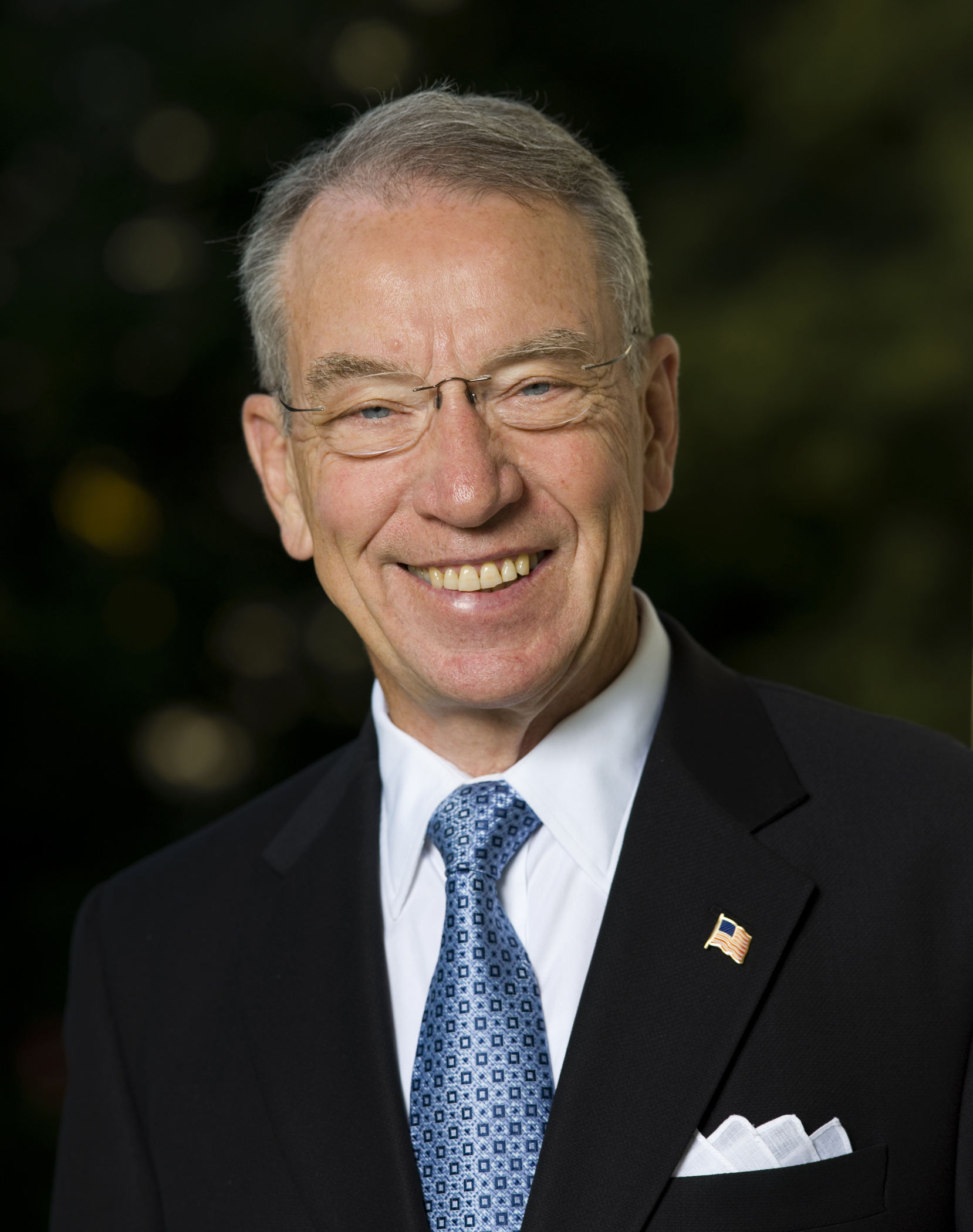
Compromise 7. Senator Grassley reject Schumer's compromise so Senator Conrad tried to come up with something Grassley would support. His idea was private non-profit health insurance cooperatives. Schumer offered a compromise of his compromise. The government would help set up single new national non-profit insurance company with a co-op legals structure. The federal government would maintain minor oversight through some permanent seats on its board of directors.

Compromise 8. Grassley rejected Schumer's compromise of his previous compromise. Conrad has decided to offer Grassley a complete capitulation. Conrad's proposal is simply to make some seed money available for “others” to set up co-op insurance companies if they wanted. (Who these “others” are who have the expertise, desire, skills, and time to create massive new non-profit insurance companies from scratch is a very good unanswered question.)

The co-ops would have not permanent government oversight. They would not be available nationwide or available from day one. There is zero guarantee that there would be a new co-op in your insurance market for you to sign up for. In fact, there is no guarantee that any new co-ops would ever be started or survive beyond a few years.
The worst part is health insurance co-ops have been tried repeatedly before. Most failed or turned into for-profit companies. Only handful still survive. So Conrad's “compromise” is to offer an idea which already exists and has failed.

The media falsely reports that Conrad's co-op proposal is a compromise between liberals who want a strong public option and Republicans who do not want insurance companies to face any new public competition.

It is a compromise of a compromise which was a compromise that is itself a compromise of a previous compromise from a former compromise of a much reduced compromise of the original compromise of the goal of many on the left.

At some point an idea is so reduced through repeated compromises as to be worthless. Conrad's co-ops are not an acceptable or legitimate compromise for progressives. It is a warm bucket of highly diluted spit stamped with the word reform.

Ted Kennedy Brings a Giant Stick To The Health Care Fight


It has been reported by the Washington Post and Bloomberg.com, that Ted Kennedy plans to release an outline of his health care reform legislation next week, with the bill to be marked up soon afterwards. If reports are correct, this is not a bipartisan bill negotiated behind closed doors. It is a very strong, progressive piece of legislation -- the kind of bill which fills the grassroots with hope and the for-profit insurance companies with fear.

It is a bill which would never overcome a filibuster in the Senate; a bill Obama might be able to force through using reconciliation if he is willing to spend a lot of political capital. It is a bold and clear warning to the health insurance industry. If you fight the compromise we offer, we will let the progressives write a bill you will hate.

From reporting I've seen, Kennedy's bill contains not one but two very strong progressives proposals, either of which the for-profit health insurance industry is sure to fight tooth and nail. Kennedy's bill is reported to contain a strong public health insurance option, based on Medicare, and a very large expansion of Medicaid. Families making up to 500% of the federal poverty level ($110,250 a year) would be eligible for Medicaid. Individuals would also be able to buy a public plan managed like Medicare.

The goal of many progressives is to allow Americans to free themselves from for-profit health insurance. Either proposal alone could do just that. It would take a lot of grassroot lobbying and pressure from the president to keep even one of them. I suspect both proposals will be heavily watered down to create a compromised bipartisan bill. This is not likely to be the final bill; this is the stick which Democrats will use to threaten anyone who is unwilling to play ball.

Senator Grassley Doesn't Want You To Have Cheap Health Insurance Because It Would Make it Hard to Find Cheap Health Insurance


According to Radio Iowa, Senator Grassley recently addressed his constituents about health care reform. I'm glad to hear him claim that he is committed to getting health care reform passed this year. Yet, I'm very disappointed that he is determined to make millions of Americans continue to pay too much for health insurance.

At a local forum Grassley referenced a new study by the Lewin Group claiming, “It's quite obvious, if you have 119 million people opt out, you aren't going to have affordable coverage for those that are left in a private health care system”. From his statement I can only conclude Grassley trusts the accuracy of the Lewin Group study and therefore is against allowing Americans to save 30% on their health insurance.

The Lewin Group studies what the effect would be of allowing Americans to choose to buy private health insurance or buy a public option which would be modeled on Medicare. The study concluded that the public plan would provide cheap, low hassle, quality health insurance for a fraction of what private insurance costs. The public plan would be roughly 30% cheaper than a comparable private plan. The “problem”, as Grassley sees it, with the public plan is that it would be such a preferable product that millions of Americans and companies would love to voluntarily switch to it. Grassley is against the public plan because he thinks too many people would like it.

Let's make this very clear: Grassley believes that having public plan based on Medicare would allow Americans to choose an insurance option which would reduce their premiums by 30%. He is against the public plan for the reason that most Americans and companies want to save money and no longer be forced to do business with private health insurance companies. So what he was saying was: he against offering Americans guaranteed affordable, effective health insurance because it could possibly make it harder for Americans to get affordable health care from private insurance companies. Grassley must decide if he wants to help the American people save money or help the health insurance industry protect its profits.

LinkWithin

Related Posts Plugin for WordPress, Blogger...